For years, lawsuits filed by individuals who were exposed to asbestos in the workplace moved forward in the courts.
Individuals without any identifiable exposure to asbestos in the workplace were unable to find justice in the courtrooms.
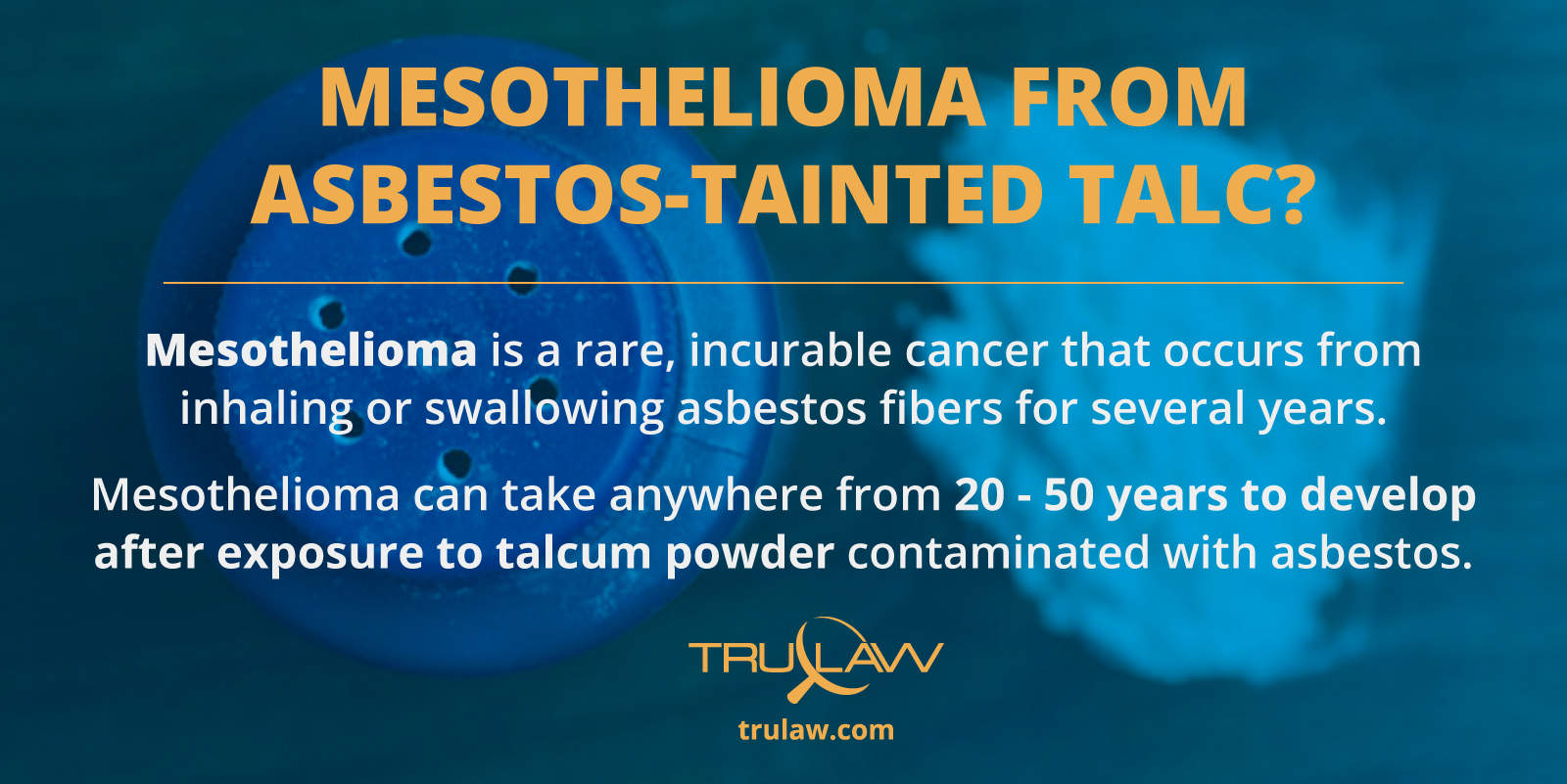
Those individuals are now looking at their use of cosmetic products containing talc.
Several lawsuits have successfully compensated individuals who allege continuous exposure to talc powder was the cause of their mesothelioma.
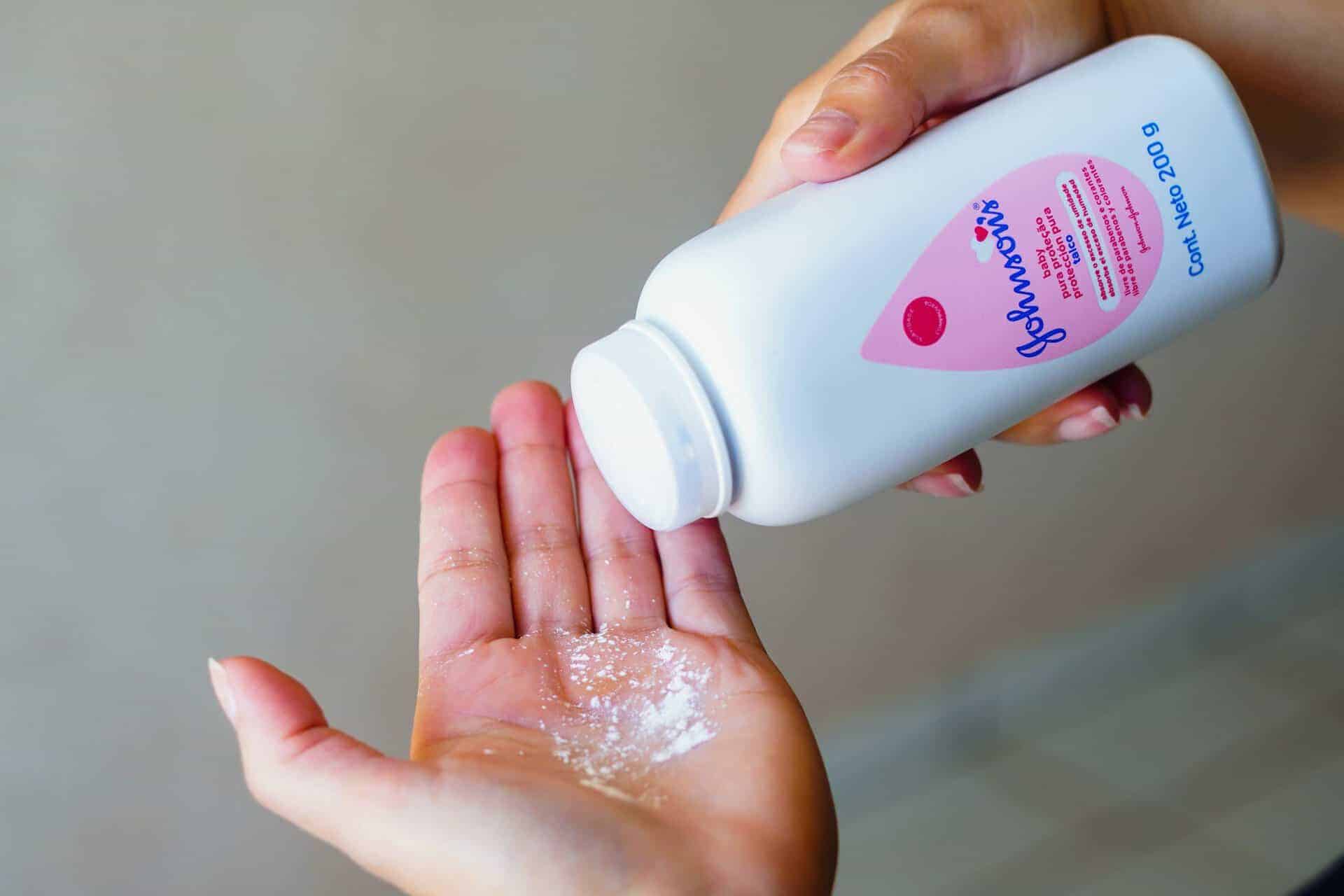
Recent cases expose evidence that talc products such as baby powder contain asbestos.
Companies such as Johnson & Johnson and Imerys Talc America have been hit with multi-million dollar verdicts for acting with reckless indifference in selling the cancer-causing products that contributed to the development of mesothelioma.
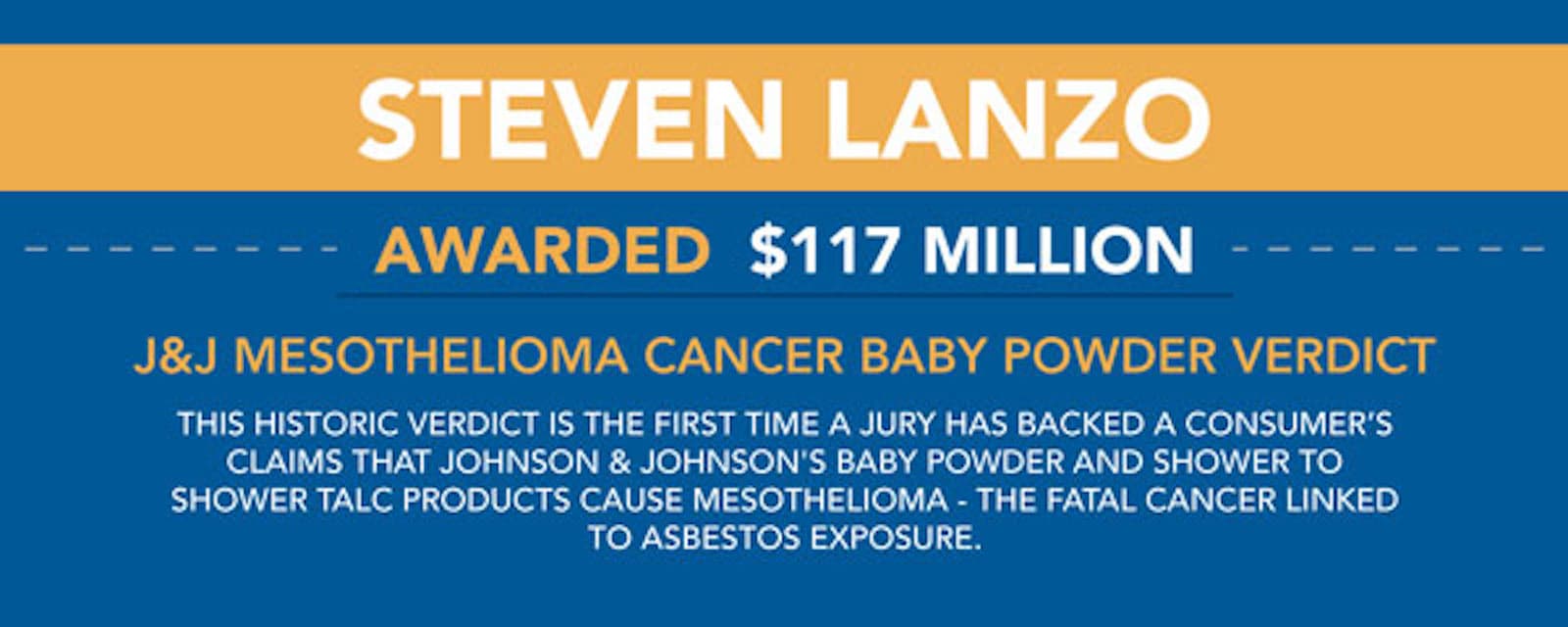
Steven Lanzo, who was recently awarded a $117 million verdict, (including $80 million in punitive damages), was exposed to talcum powder products starting in the 1970’s when his mother used baby powder on him as an infant.
Lanzo continued this common practice through his adult life to 2003.
The jury found that this use of baby powder products played a substantial role in Steven’s mesothelioma diagnosis.
Johnson & Johnson used tests that detect asbestos only above a certain threshold and for that reason, did not report asbestos in talcum, according to the Lanzo case.
This same high standard was used by researchers that lawyers alleged were influenced by Johnson & Johnson in publishing biased scientific literature.
J&J continues to deny the existence of asbestos fibers in their talc products.
The jury in the Lanzo case awarded punitive damages because they found that J&J knew their talc powder products contained asbestos for over 50 years but kept that information hidden from the public.