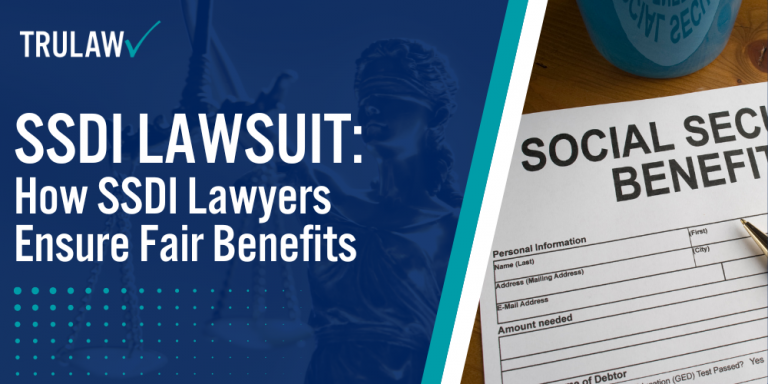
Social Security Disability Insurance (SSDI) stands as a lifeline for individuals who are unable to work due to severe, long-term disabilities.
Eligibility hinges on having worked sufficient years in jobs covered by Social Security and having a medical condition that meets the strict definition of disability under Social Security standards.
Overview of Social Security Disability Insurance (SSDI)
Securing SSDI benefits can be extensive, often requiring detailed documentation and adherence to specific legal criteria outlined in the Social Security Disability Benefits Reform Act of 1984.
Beneficiaries must prove their inability to engage in any substantial gainful activity because of a medically determinable physical or mental impairment expected to last at least one year or result in death.
SSDI’s impact on people’s lives is immense, offering financial relief recognition and validation for those whose conditions dramatically alter their capacity for regular work.
Social Security Disability Benefits
Social Security Disability Benefits provide crucial financial support for individuals who cannot work due to a long-term disability.
The Social Security Act requires these benefits for those with sufficient employment history and qualifying disabilities, ensuring a safety net is in place.
Monthly cash benefits from SSDI help cover living expenses, medical costs, and other necessities for nonelderly disabled persons.
To receive SSDI benefits, one must have worked in jobs covered by Social Security and have a medical condition that meets the strict definition of disability under the act.
This helps differentiate SSDI from other forms of assistance, such as workers’ compensation or SSI, which cater to different needs like temporary injuries or financial aid based on income resources.
SSDI benefits are a form of income replacement for those who paid into the system but can no longer continue their employment due to severe health issues.
Eligibility Requirements for SSDI Benefits
Qualifying for Social Security Disability Insurance requires meeting specific criteria set by the Social Security Administration.
Applicants must demonstrate a work history and a medically recognized disability.
To qualify for Social Security Disability Insurance, applicants generally need to meet the following requirements:
- Work Credits Count: You must have worked long enough and recently enough to earn sufficient work credits. Typically, 40 credits are required, half of which should be from the last 10 years ending with the year you became disabled.
- Disability Verification: The disability must match the SSA’s definition; it should significantly limit your ability to do basic work activities for at least one year or result in death.
- Age Consideration: Individuals over 31 need 20 credits earned in the last 10 years before disability onset. Younger workers may qualify with fewer credits.
- Recent Work Test: This checks if you have worked close enough to your claim time. For example, if you’re between age 31 and 42, you’ll need at least five years of work out of the ten-year period ending with the quarter your disability began.
- Medical Documentation: Adequate evidence from healthcare providers is essential to prove that your condition impedes your capacity to perform any substantial gainful activity (SGA).
- Income Limits: Earning more than a certain amount monthly generally signifies that you’re not considered disabled under SSDI rules.
- Unmarried Status Requirement: For adults applying for SSDI on their own work record, being unmarried is part of the eligibility criteria.
- Concurrent Benefit Eligibility: There’s potential for concurrent benefits from both SSDI and SSI if you satisfy the requirements for both programs due to limited income and resources.
- Duration of Disability: The disabling condition must either be expected to last at least one year or result in death.
If you or a loved one are filing an SSDI application or appeal, contact TruLaw today using the chat on this page to receive an instant case evaluation.