While transvaginal mesh implants have been a common treatment for pelvic organ prolapse (POP), concerns over associated risks have led to a demand for alternative treatment options.
This section explores various alternatives available for women seeking treatment for POP.
Non-Surgical Treatments
While transvaginal mesh implants are a common solution for pelvic organ prolapse, they are not the only option available.
Patients may explore a variety of non-surgical treatments that offer relief and management of symptoms without the need for invasive procedures.
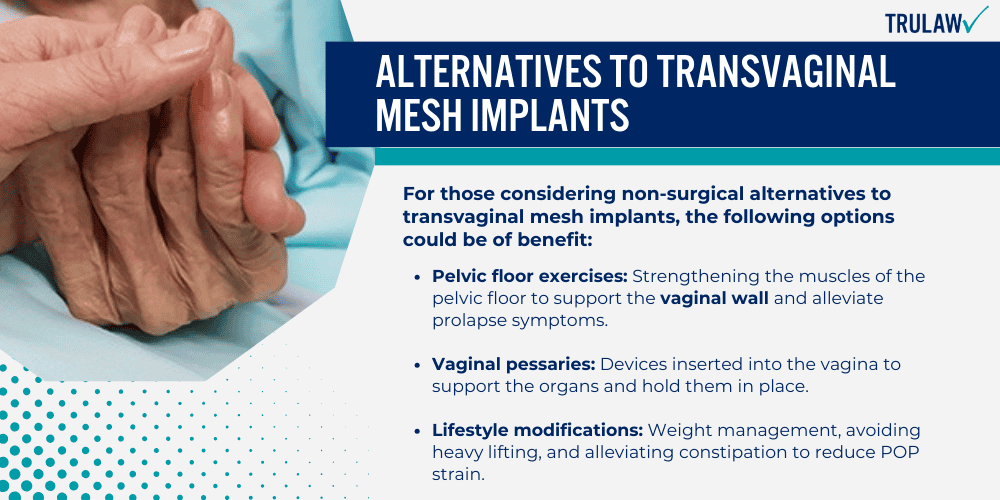
For those considering non-surgical alternatives to transvaginal mesh implants, the following options could be of benefit:
- Pelvic floor exercises: Strengthening the muscles of the pelvic floor to support the vaginal wall and alleviate prolapse symptoms.
- Vaginal pessaries: Devices inserted into the vagina to support the organs and hold them in place.
- Lifestyle modifications: Weight management, avoiding heavy lifting, and alleviating constipation to reduce POP strain.
- Physical therapy: Guided sessions to improve pelvic muscle control and support.
Native Tissue Repair
Native tissue repair is an effective surgical alternative that does not involve the use of mesh implants.
Key components of this procedure include:
- Reconstructive surgery: Realigning and securing the prolapsed organs into their original position using the patient’s own tissues.
- Uterosacral ligament suspension: Elevating the apex of the vagina by attaching it to the uterosacral ligaments.
- Sacrospinous fixation: A procedure that attaches the vaginal vault to the sacrospinous ligament.
- Anterior and posterior colporrhaphy: Tightening the front or back walls of the vagina to treat cystocele or rectocele.
Other Surgical Options
For patients seeking alternatives to transvaginal mesh implants, modern medicine offers a range of other surgical methods, each with its own benefits and considerations.
Often preferred for specific clinical scenarios, these options provide diverse approaches to addressing pelvic organ prolapse.
In addition to native tissue repair, several other surgical treatment options serve as alternatives to transvaginal mesh implants:
- Biological graft repair: Utilizes grafts from human or animal tissue for vaginal wall support.
- Autologous fascial sling: Using the patient’s own tissue to create a sling beneath the urethra for support.
- Robotic surgery: Advanced, minimally invasive procedures that can address prolapse with precision and reduced recovery times.
- Laparoscopic sacrocolpopexy: A keyhole surgery approach to attach the vagina to the sacral promontory, providing support.