Several organizations, including the National Cancer Institute’s Division of Cancer Epidemiology and Genetics (DCEG), have conducted research linking regular exposure to firefighting foam with an increased risk of various cancers.
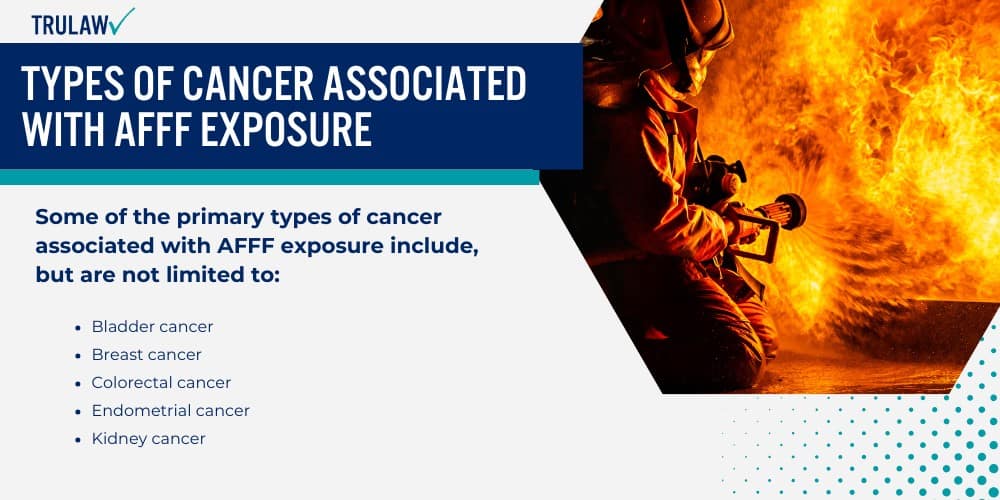
Below, we highlight some of the primary types of cancer associated with AFFF exposure, which include but are not limited to:
Bladder Cancer
Studies have shown a higher incidence of bladder cancer in individuals exposed to AFFF.
Toxic chemicals in AFFF can enter the bloodstream and accumulate in the bladder, potentially leading to the development of cancerous cells.
This risk is particularly prevalent in areas with contaminated drinking water due to AFFF runoff.
Colorectal Cancer
Exposure to AFFF has also been associated with an increased risk of colorectal cancer.
The chemicals in AFFF may affect the lining of the colon and rectum, leading to cancerous tumors.
PFAS exposure is believed to contribute to the development of both colon and rectal cancers.
Kidney Cancer
Research suggests a potential link between AFFF exposure and kidney cancer.
The chemicals in AFFF, particularly perfluorooctanoic acid (PFOA), can be filtered by the kidneys, potentially causing damage and increasing the risk of cancer.
PFOA has been identified as a likely renal carcinogen.
Liver Cancer
AFFF exposure has been connected to an elevated risk of liver cancer.
The liver is responsible for detoxifying chemicals in the body, and prolonged exposure to AFFF can cause liver damage and inflammation, potentially leading to the development of cancerous cells.
Studies indicate that PFAS exposure increases the risk of certain types of liver cancer.
Testicular Cancer
There is a noted increase in testicular cancer among individuals exposed to AFFF.
The chemicals in AFFF may disrupt hormone levels, affecting the reproductive system and leading to a higher risk of testicular cancer.
Research has shown a correlation between elevated PFOA levels and the incidence of this cancer.
Prostate Cancer
AFFF exposure has been linked to an increased risk of prostate cancer.
The toxic chemicals in firefighting foam can interfere with hormone regulation, potentially resulting in cancerous growths in the prostate gland.
Populations exposed to PFAS-containing foam have shown a higher incidence of prostate cancer.
Pancreatic Cancer
Emerging evidence suggests a possible connection between AFFF exposure and pancreatic cancer.
The harmful chemicals in AFFF may negatively affect the pancreas, leading to the development of cancerous tumors.
Studies indicate a higher occurrence of pancreatic cancer in individuals with known PFAS exposure.
Additional Health Issues Tied to Toxic Firefighting Foam Exposure
In addition to an increased risk of cancer, research has shown that AFFF exposure may also contribute to several non-cancerous health conditions.
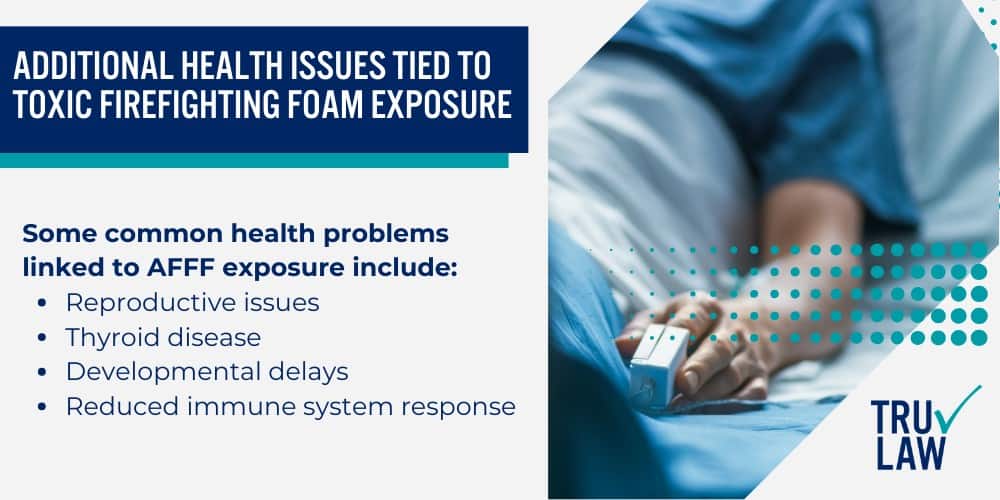
Some common health problems linked to AFFF exposure include:
- Reproductive issues
- Thyroid disease
- Developmental delays
- Reduced immune system response
These findings highlight the serious health risks associated with toxic firefighting foam exposure, underscoring the importance of exploring legal options for those affected.