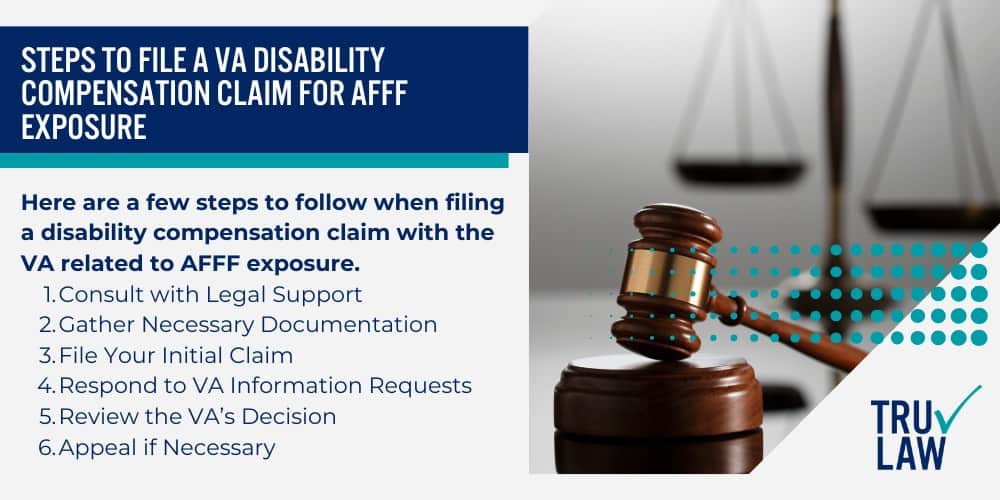
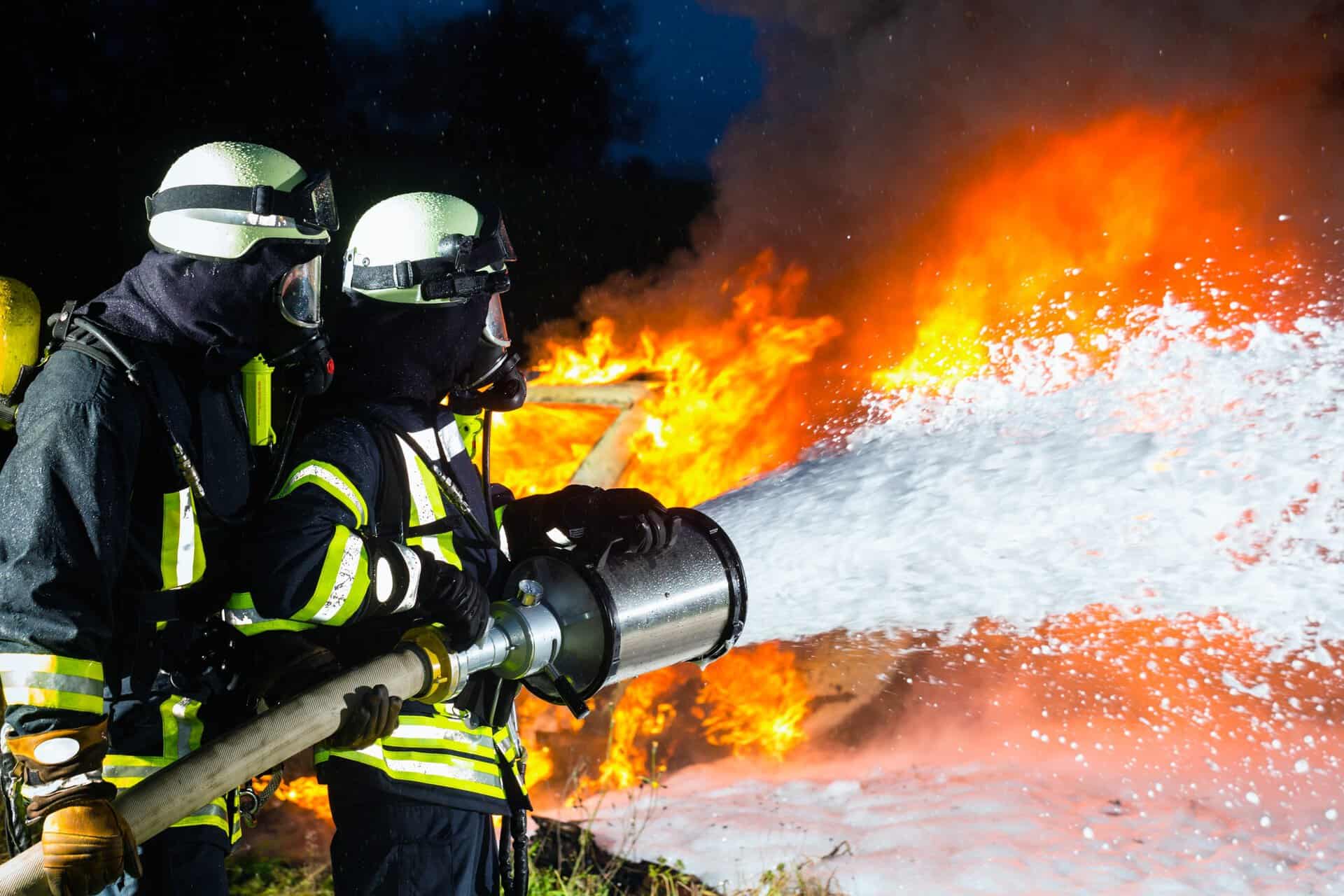
The VA disability claims process for exposure to AFFF firefighting foam ensures that you take the proper steps toward securing benefits.
By becoming familiar with each stage, you can better prepare to pursue the compensation you may be entitled to through VA disability benefits.
In this section, we’ll guide you through the necessary steps involved in filing a VA claim related to AFFF exposure.
Filing Your Initial VA Claim
The first step in pursuing VA disability benefits is filing your initial claim with the Department of Veterans Affairs.
This claim must include formal documentation that verifies your exposure to AFFF and PFAS, along with medical evidence showing that you’ve developed cancer or other related health conditions from this exposure.
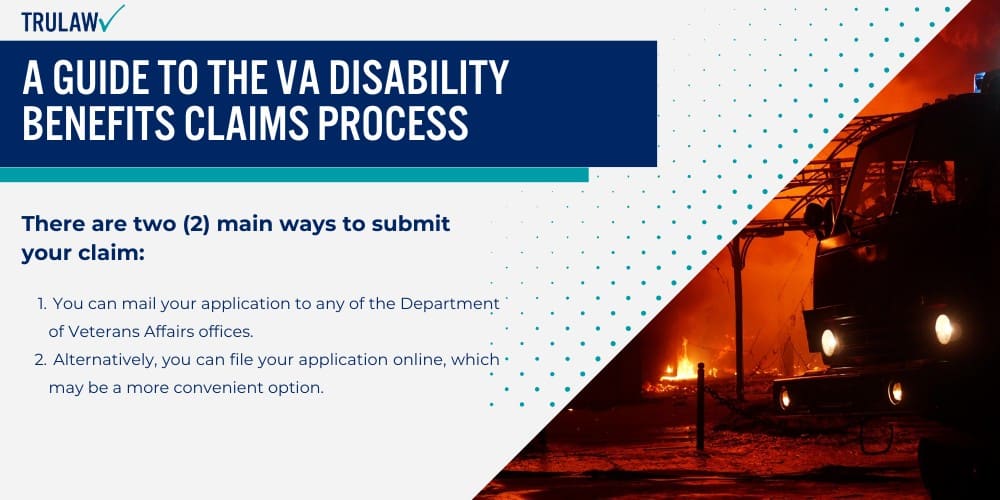
There are two (2) main ways to submit your claim:
- You can mail your application to any of the Department of Veterans Affairs offices.
- Alternatively, you can file your application online, which may be a more convenient option.
Development and Evidence Collection
After your initial claim is filed, the VA will begin gathering evidence to build your case.
This stage involves collecting relevant documents such as medical records and service history.
It’s important to be proactive during this process, providing any additional information or documentation that the VA may request.
Being responsive can help ensure your claim progresses smoothly and without unnecessary delays.
VA Claim Review Process
Once all necessary evidence has been gathered, the VA will review your claim.
During this phase, a claims examiner evaluates the documentation to determine the validity of your case.
The review process can vary in length depending on factors such as the nature of your case, the VA’s current workload, and whether additional evidence is needed.
In many cases, the VA may take up to 103 days to process and make a decision on your claim.
It’s important to remain patient and check in periodically to stay updated on your claim’s progress.
VA Decision on Your Claim
When the review is complete, the VA will issue a decision.
The outcome will generally fall into one of three categories:
- Approval: If your claim is approved, you will be notified of the benefits you are eligible to receive, which may include medical compensation and disability ratings.
- Denial: If your claim is denied, the VA will provide an explanation for the decision and may request additional documentation to support your case.
- Request for Additional Information: In some cases, the VA may need further evidence, such as medical evaluations or other supporting documents, before issuing a final decision.
Regardless of the outcome, it’s important to review the VA’s decision carefully to fully understand your next steps.
Appealing a Denied Claim
If you disagree with the VA’s decision, you have the right to file an appeal.
The appeals process allows you to present additional evidence and argue your case for reconsideration.
While the appeal process can be challenging, especially in cases involving AFFF exposure, it’s important to know that support is available.
The AFFF firefighting foam lawyers at TruLaw and our partner law firms are here to help individuals explore their legal options if they have been denied AFFF-related disability benefits.
If you are interested in pursuing an AFFF lawsuit following a VA claim denial, don’t hesitate to reach out for more information.
Use the chat on this page for an instant case evaluation to determine if you qualify to file an AFFF lawsuit today.