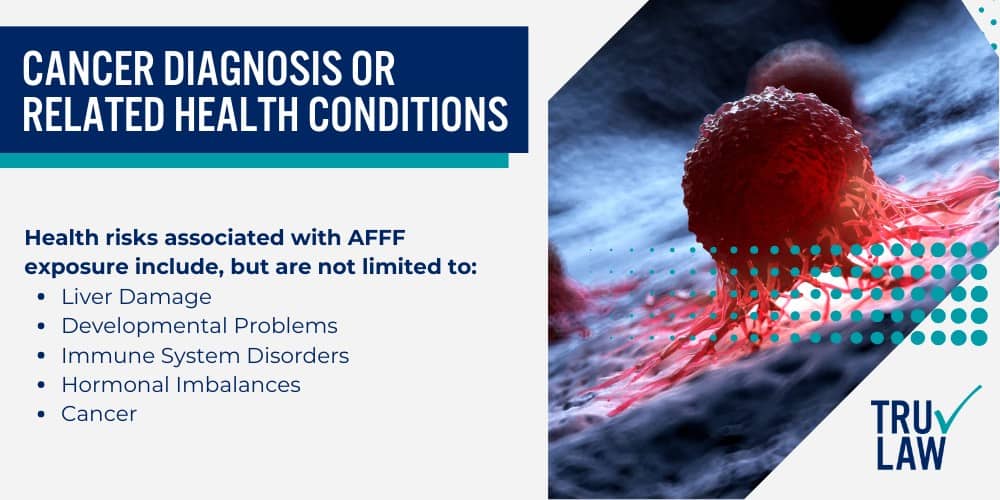
AFFF and PFAS are known to persist in the human body for extended periods of time.
Once PFAS chemicals are ingested, inhaled, or absorbed through the skin, they can accumulate in various organs and tissues — remaining in the body for long durations due to their resistance to breaking down.
This prolonged presence of PFAS is linked to numerous health concerns, particularly after long-term exposure.
Cancer Risks from AFFF Exposure
A growing body of scientific research, including studies from the Environmental Protection Agency, has raised concerns about the relationship between PFAS exposure and cancer.
Certain PFAS chemicals found in AFFF firefighting foam have been identified as potential carcinogens, contributing to an increased risk of cancer for those exposed to these substances.
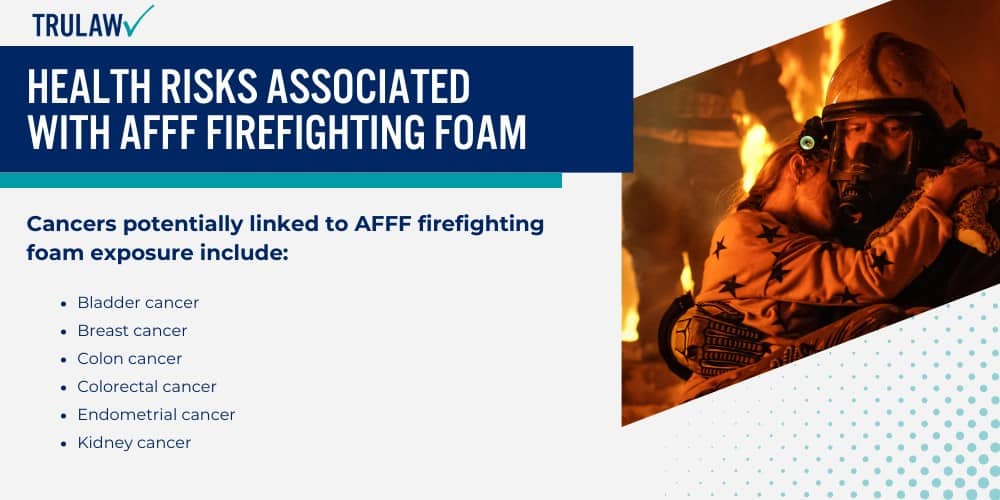
Cancers potentially linked to AFFF firefighting foam exposure include:
Bladder Cancer
Bladder cancer affects the inner layers of the bladder, often leading to symptoms such as blood in the urine or increased frequency of urination.
Emerging evidence has suggested a possible connection between AFFF foam exposure and bladder cancer.
Breast Cancer
Breast cancer, one of the most commonly discussed cancers in AFFF cases, involves a diverse group of malignancies originating from various breast tissues.
Research has demonstrated that PFAS exposure may increase the risk of breast cancer by as much as 13 times.
Colon Cancer
Colon or colorectal cancer begins in the lining of the colon or rectum and may start as benign polyps, which can develop into invasive cancer.
Scientific studies have linked PFAS chemicals to an increased risk of colon cancer.
Kidney Cancer
Renal cell carcinoma, or kidney cancer, involves the abnormal growth of cells in the kidneys.
Research has indicated a growing connection between toxic firefighting foam exposure and an elevated risk of developing kidney cancer.
Recent studies suggest a correlation between PFAS exposure and this type of cancer.
Liver Cancer
Liver cancer, a life-threatening condition, occurs when malignant cells grow uncontrollably in the liver.
Studies have shown that PFAS accumulation can damage liver tissues and potentially lead to cancer.
Research published in scientific journals has further highlighted the potential link between AFFF exposure and liver cancer.
Pancreatic Cancer
Pancreatic cancer is an aggressive form of cancer that often remains undetected until advanced stages.
Studies have shown evidence that PFAS exposure can cause oxidative stress in pancreatic cells, increasing the risk of cancer over time.
Prostate Cancer
Prostate cancer, a slow-growing cancer affecting the prostate tissue, is most common among older men.
Although research into the connection between AFFF exposure and prostate cancer is still emerging, some studies suggest that hormonal changes combined with PFAS exposure may contribute to the development of cancerous cells in the prostate.
Rectal Cancer
Rectal cancer, which affects the lower part of the large intestine, is another malignancy under investigation for possible links to AFFF exposure.
While research into the connection is ongoing, some studies suggest a potential association that warrants further exploration.
Testicular Cancer
Testicular cancer originates in the germ cells that develop into sperm.
Research has indicated potential links between PFAS exposure and an increased risk of testicular cancer, particularly due to PFAS’s impact on hormone production and levels in the body.
Thyroid Cancer
Thyroid cancer begins in the follicular cells of the thyroid gland, which produces hormones that support bodily functions.
Evidence from scientific research has pointed to a connection between PFAS exposure and thyroid cancer, as these chemicals can disrupt normal thyroid function, leading to the development of malignant cells.