TruLaw is investigating the Ethylene Oxide Lawsuit.

Ethylene Oxide Lawsuit | Ethylene Oxide Exposure Risks

100% free consultation
No out-of-pocket costs
No fee unless we win

Key Takeaways

  • Ethylene oxide litigation demonstrates how industrial facilities operating without proper emission controls can lead to community health impacts and substantial settlements.

  • Residents in areas such as Cobb County, Georgia, and Grand Rapids, Michigan, can minimize risk through awareness of local industrial activities, maintaining medical records, and following recommended health screenings if living in known contamination zones.

  • Recent litigation shows a single plaintiff with documented exposure history and medical evidence can successfully pursue compensation.

Key takeaways

What is the Ethylene Oxide Lawsuit?

Question: What is the Ethylene Oxide Lawsuit?

Answer: The Ethylene Oxide Lawsuit refers to legal actions taken against companies that use or emit ethylene oxide (EtO), a chemical widely used for sterilizing medical equipment and in manufacturing various consumer products.

TruLaw is actively accepting new clients for the Ethylene Oxide Lawsuit.

On this page, we’ll answer this question in further depth, health risks associated with Ethylene Oxide Exposure, qualifying for an Ethylene Oxide Lawsuit, and much more.

Ethylene Oxide Lawsuit

Ethylene Oxide Lawsuits: Occupational & Community Exposure

The Ethylene Oxide Lawsuits target sterilization facilities and other entities responsible for EtO emissions, where serious health issues have been reported, such as breast cancer, lymphatic leukemia, and birth defects.

Numerous affected individuals have been exposed to ethylene oxide for years without their knowledge and are unaware of the serious health risks.

The EPA has categorized Ethylene Oxide as a Group 1 human carcinogen to indicate there is substantial evidence connecting exposure to cancer development in humans.

Exposure to ethylene oxide has been associated with breast cancer, various forms of leukemia (ALL, AML, CLL, and Hairy Cell Leukemia), Hodgkin lymphoma, multiple myeloma, and several types of non-Hodgkin lymphoma.

Lawyers nationwide are currently filing claims against Sterigenics, Viant Medical, and other EtO manufacturers on behalf of occupational exposure victims and the surrounding community to hold them responsible for damages caused by their negligent actions.

If you or a loved one developed health problems after exposure to ethylene oxide emissions from nearby industrial facilities, you may be eligible to seek compensation.

Contact TruLaw using the chat on this page to receive an instant case evaluation and determine your eligibility to join others in filing an Ethylene Oxide Lawsuit today.

Ethylene Oxide Lawsuit

Ethylene Oxide Lawsuit Updates Timeline

June 27th, 2025: Employer Liability in EtO Exposure - What Workers Should Know

Ethylene oxide (EtO) is a toxic gas used in medical sterilization and chemical manufacturing, and exposure to it has been linked to serious health conditions.

Workers who regularly encounter EtO—especially in sterilization facilities, hospitals, and nearby businesses—face increased risks of developing lymphoma, leukemia, breast cancer, respiratory issues, and reproductive harm.

Exposure often occurs through inhalation or skin contact, particularly in workplaces with inadequate ventilation or safety protocols.

While workers’ compensation may be one avenue for relief, many affected individuals may also have grounds for filing toxic tort or product liability lawsuits against negligent employers or equipment manufacturers.

To support a legal claim, exposed workers should begin collecting:

  • Detailed job descriptions and employment history
  • Medical records and diagnostic reports
  • Workplace exposure logs or monitoring results
  • Testimonies from coworkers about unsafe conditions

Employers are obligated to monitor EtO levels, provide protective gear, and ensure proper safety training.

A failure to uphold these responsibilities may open the door to legal action.

June 25th, 2025: Ethylene Oxide Exposure in North Carolina Raises Alarms

Communities throughout North Carolina may be unknowingly exposed to dangerous levels of ethylene oxide (EtO), a toxic gas used to sterilize medical supplies.

A recent WRAL report identified five warehouses across the state storing EtO-sterilized products—one of which is located in Four Oaks, just 1,100 feet from nearby homes.

These warehouses, operated by companies such as Becton Dickinson, Owens & Minor, and Medline, remain largely unregulated despite EtO being classified as a known human carcinogen.

Long-term exposure to the gas has been linked to serious health risks, including breast cancer and non-Hodgkin lymphoma—even at very low concentrations.

While sterilization facilities are subject to federal EtO emission standards, off-site warehouses that store sterilized products are not currently held to the same regulatory oversight.

North Carolina does not monitor emissions from these storage sites, and the EPA has yet to propose rules to address this regulatory loophole.

Residents near the Four Oaks warehouse have voiced concerns about air quality and public health, urging officials to implement more robust monitoring and transparency.

June 9th, 2025: Steris Reaches $48 Million Settlement in Illinois Ethylene Oxide Lawsuits

Steris Corporation has agreed to pay up to $48.15 million to settle personal injury lawsuits tied to ethylene oxide (EtO) emissions from its former sterilization facility in Waukegan, Illinois.

The settlement, reached through Steris’s Isomedix subsidiary, is intended to resolve nearly all pending cases in Cook County Circuit Court involving claims of cancer and other serious health issues.

Plaintiffs allege that emissions from the facility, operated between 2005 and 2008, exposed surrounding communities to harmful levels of EtO—a carcinogenic gas used widely in medical sterilization.

Although Steris denies liability and maintains the emissions posed no safety risk, the company agreed to the payout to efficiently resolve litigation.

The deal, disclosed in a March 2025 securities filing, is still subject to court approval and requires a significant number of plaintiffs to opt in.

If these conditions are not met, Steris may withdraw from the agreement and proceed with defense in court.

The EPA continues to flag EtO sterilization plants as high-risk cancer sites, prompting tighter federal regulations and pressure to transition to safer alternatives.

May 21st, 2025: Georgia Judge Orders Retrial on Punitive Damages in $20 Million Ethylene Oxide Case Against C.R. Bard

A Georgia judge has declared a mistrial on the issue of punitive damages in a lawsuit involving C.R. Bard, following a recent $20 million compensatory award to plaintiff Gary Walker.

The decision to retry this portion of the case comes after a juror disclosed that they did not personally agree with the original decision but went along with the rest of the jury.

The retrial will focus solely on whether C.R. Bard should be held liable for punitive damages in connection with its sterilization facility in Covington, Georgia.

Walker, a longtime resident of the area and a former delivery driver for the plant, was diagnosed with non-Hodgkin’s lymphoma after years of exposure to ethylene oxide, a chemical commonly used in sterilization processes and known to carry significant health risks.

The jury had initially awarded $50 million in punitive damages, but that award was voided following the juror’s admission.

Judge Emily Brantley has confirmed that a new trial will be scheduled to decide if Bard’s conduct demonstrated intent or conscious indifference—standards that must be met under Georgia law to justify punitive damages.

Jurors, however, will not be informed of any statutory caps that may apply to such damages.

Walker’s case is one of many emerging from growing concerns over toxic emissions from medical sterilization facilities.

The Environmental Protection Agency responded to these concerns in March 2024 by issuing stricter safety regulations, including continuous emissions monitoring and enhanced controls for sterilization equipment.

While alternatives to ethylene oxide have been proposed, the gas remains widely used in the medical industry across the United States, keeping litigation and regulatory scrutiny at the forefront of public health discussions.

May 2nd, 2025: Georgia Jury Awards $20 Million in First Ethylene Oxide Verdict Against C.R. Bard

A Georgia jury awarded $20 million to Gary Walker, a retired truck driver who claimed exposure to ethylene oxide (EtO) from C.R. Bard’s Covington sterilization plant caused his lymphoma.

The jury found Bard liable for both negligence and nuisance, determining that a second trial phase is necessary to address punitive damages.

That next phase is scheduled to begin on Monday, May 19.

Walker, now in remission, lived roughly 1.5 miles from the Bard facility beginning in 1991 and regularly delivered to the site until his retirement in 1999.

He was diagnosed with lymphoma in 2017 at age 68 and received ten rounds of chemotherapy in addition to a stem-cell transplant.

His attorneys introduced internal documents and regulatory records showing Bard declined to adopt emissions controls for decades despite repeated warnings from both regulators and its ethylene oxide supplier, Union Carbide.

The jury reviewed a 1985 memo from Georgia environmental officials noting that Bard “does not want to control its emissions at this time.”

During closing arguments, plaintiff’s attorney Lindsay Forlines asserted that Bard had the tools to limit emissions but chose not to use them.

Defense counsel Eric Rumanek countered that Walker’s illness was unrelated, pointing out that no physician had directly linked his cancer to EtO exposure.

This case marks the first EtO exposure verdict in Georgia favoring a plaintiff, potentially opening the door to significant legal exposure for Bard.

Judge Emily Brantley will preside over the punitive damages retrial beginning May 19.

April 16th, 2025: Georgia Jury Considers Claims That C.R. Bard Exposed Local Resident to Toxic Ethylene Oxide

A Georgia jury began proceedings Tuesday in a case alleging that C.R. Bard’s Covington sterilization plant exposed a nearby resident to ethylene oxide (EtO) over several decades, leading to his cancer diagnosis.

The plaintiff, Gary Walker, a retired truck driver, claims he developed non-Hodgkin lymphoma due to years of residential and occupational exposure to the chemical.

According to his legal team, the facility released close to 10 million pounds of EtO between 1970 and 2017, operated without emissions controls until 1990, and ignored repeated warnings from both regulators and its EtO supplier, Union Carbide.

Jurors were shown a 1985 memo from Georgia environmental officials stating that Bard “does not want to control its emissions at this time.”

Bard denies any responsibility, asserting that Walker’s illness was caused by a random genetic mutation unrelated to EtO exposure.

The company maintains that it has complied with regulatory standards and adopted safety measures in line with evolving federal guidelines.

Defense attorneys also pointed to the critical role EtO plays in sterilizing more than half of all medical devices used in the United States, and emphasized Bard’s use of emissions monitoring and pollution controls.

This trial marks the first EtO exposure case in Georgia to be brought before a jury.

Similar lawsuits are underway in other states, including recent defense-favorable outcomes in Colorado and Pennsylvania.

March 24th, 2025: Steris Reaches $48 Million Settlement Over Ethylene Oxide Claims in Illinois

Steris Corporation has agreed to a settlement of up to $48.15 million to resolve personal injury lawsuits tied to ethylene oxide (EtO) emissions from its former sterilization facility in Waukegan, Illinois.

The settlement, negotiated through Steris’ Isomedix subsidiary, is intended to resolve nearly all of the active cases filed in Cook County Circuit Court, which allege cancer and other serious health conditions linked to EtO exposure.

Disclosed in a March 2025 securities filing, the agreement follows increasing legal and regulatory attention to EtO, a gas classified as carcinogenic and widely used to sterilize medical devices in the United States.

Plaintiffs claim that emissions from the Waukegan plant posed a health threat to the surrounding community between 2005 and 2008, the years during which Steris operated the site.

Although Steris has not admitted any liability or acknowledged that the emissions posed a health risk, the company stated that the agreement is intended to resolve the litigation efficiently and avoid prolonged legal proceedings.

Steris announced it will record the settlement as a charge in its fiscal 2025 financials but will exclude it from adjusted earnings.

Earlier this year, the first EtO case against Steris concluded in a mistrial, leaving the door open for further litigation.

The proposed settlement is now subject to court approval and requires a significant majority of plaintiffs to agree to its terms; if that threshold is not reached, Isomedix retains the option to withdraw and resume its legal defense.

The Environmental Protection Agency has identified several EtO-emitting sterilization sites across the country as high cancer risk areas, prompting stricter emissions standards.

In response to regulatory pressure, sterilization companies and device manufacturers are exploring alternatives such as vaporized hydrogen peroxide to reduce dependence on EtO.

Steris continues to operate as one of the leading global providers of medical sterilization services through its Applied Sterilization Technologies division, which has since absorbed the Isomedix name.

February 18th, 2025: Confidential Settlement Reached in Ethylene Oxide Exposure Lawsuits Against B. Braun

Medical device manufacturer B. Braun has reached a confidential settlement resolving the majority of lawsuits filed by residents near its Lehigh County, Pennsylvania facility, who alleged harmful exposure to ethylene oxide (EtO), a gas associated with cancer and neurological disorders.

Dozens of individuals had brought legal claims asserting that emissions from the sterilization plant led to increased health risks, including diagnoses of breast cancer, lymphoma, and other serious conditions.

Although B. Braun continues to deny any liability, the company confirmed the settlement this week and stated it will still defend against the remaining unresolved cases.

Details of the agreement have not been made public.

In response to growing legal and public health concerns, B. Braun reported that it voluntarily installed a new emissions control system in 2020 that has reduced EtO emissions by more than 99.9%, exceeding current regulatory requirements.

This settlement comes amid heightened national focus on EtO emissions and their potential health impacts.

In March 2024, the Environmental Protection Agency implemented more stringent rules for commercial sterilization facilities, mandating real-time air monitoring and imposing limits on emissions during start-up and shutdown processes.

These rules apply to roughly 90 sterilization sites across the United States.

The legal actions against B. Braun are part of a broader trend of litigation aimed at companies in the medical sterilization sector.

In 2023, Sterigenics agreed to a $408 million settlement in cases involving EtO exposure in Illinois, Georgia, and Michigan, while Steris is currently facing hundreds of similar lawsuits nationwide.

Although ethylene oxide remains a cornerstone in sterilizing approximately half of all medical devices used in the U.S., mounting pressure from health advocates and legal developments is fueling demand for safer alternatives.

As litigation progresses and regulatory scrutiny intensifies, both manufacturers and policymakers may face increased urgency to transition toward less hazardous sterilization technologies.

November 15th, 2024: Cosmed Group Files for Bankruptcy Amid Surge in Ethylene Oxide Litigation

Cosmed Group Inc., a sterilization company serving the medical and food industries, has filed for Chapter 11 bankruptcy protection in Houston, Texas, in the face of growing litigation over its use of ethylene oxide (EtO).

The filing comes after the company was named in more than 300 lawsuits, including two class actions, alleging that EtO emissions from its facilities caused cancer and other serious health issues in nearby communities.

Ethylene oxide is a chemical used in sterilizing medical devices and food products, and it is classified as a known human carcinogen.

At a court hearing, Cosmed’s attorney, David Eastlake, stated that the volume and scope of the litigation—spanning multiple jurisdictions and including both active and former facilities—posed a significant threat to the company’s continued operation.

Cosmed filed for bankruptcy alongside its affiliate, Spicey Partners Real Estate Holdings, with both entities reporting liabilities exceeding $100 million.

U.S. Bankruptcy Judge Christopher Lopez approved an emergency motion to allow the company to meet its $65,000 payroll for its 51 employees, while other funding and operational matters will be addressed in subsequent hearings.

This is not Cosmed’s first encounter with environmental compliance issues; in 2005, the company paid $1.5 million to settle a U.S. Environmental Protection Agency investigation into EtO emissions at multiple facilities across six states.

The bankruptcy filing follows a broader pattern of legal and regulatory challenges for sterilization firms, as public and governmental scrutiny of ethylene oxide intensifies.

At this stage, Cosmed has not indicated whether it plans to pursue a global settlement strategy through its bankruptcy proceedings.

May 22nd, 2024: Sterigenics Agrees to $35 Million Settlement in Georgia Ethylene Oxide Lawsuits

Sterigenics, along with its parent company Sotera Health, has reached a $35 million settlement to resolve a set of lawsuits alleging that emissions from its medical sterilization facility in Cobb County, Georgia, caused cancer and other health complications in nearby residents.

The agreement represents a key development in the expanding litigation landscape surrounding ethylene oxide exposure across Georgia.

The lead plaintiff in the settled case was diagnosed with leukemia at age 20 after living for 13 years in proximity to the Sterigenics facility.

His lawsuit, filed in 2020, claimed that long-term inhalation of airborne ethylene oxide—a chemical classified as a known carcinogen—was the most likely cause of his illness.

Ethylene oxide is widely used in the sterilization of medical equipment due to its effectiveness at disrupting DNA, but those same properties have been linked to increased cancer risk, particularly leukemia and lymphoma, according to the CDC and National Institutes of Health.

The case was one of the earliest legal actions in Georgia focused on emissions from Sterigenics, and its progression has helped prompt broader legal and regulatory attention to similar facilities.

The plaintiff is now in remission and has recently earned his degree from the University of Utah.

Under the terms of the proposed settlement, the agreement is contingent on full participation from all plaintiffs involved in the case.

Sterigenics and Sotera have not admitted liability or fault but stated the settlement is intended to resolve the claims efficiently and avoid further litigation.

This resolution does not address all pending lawsuits, as the companies continue to face additional personal injury and property damage claims.

Further hearings, including those set for October 2024, will examine scientific evidence concerning general causation and the risks posed by EtO exposure.

The $35 million agreement may influence the direction of other EtO-related cases in Georgia and potentially nationwide, as plaintiffs and regulators alike continue to scrutinize emissions from sterilization facilities and their impact on public health.

April 9th, 2024: EPA Finalizes Rule Targeting Major Reduction in Ethylene Oxide and Chloroprene Emissions

The U.S. Environmental Protection Agency (EPA) has finalized a sweeping regulatory update aimed at curbing emissions of hazardous air pollutants from the Synthetic Organic Chemical Manufacturing Industry (SOCMI) as well as polymer and resin production facilities.

This final rule specifically targets reductions in emissions of ethylene oxide (EtO) and chloroprene, both of which are classified as known human carcinogens.

Key Provisions of the Rule:

  • Emission Reductions: The EPA anticipates that the rule will result in a reduction of approximately 54 tons of ethylene oxide and 14 tons of chloroprene emissions each year, cutting emissions from regulated sources by about 80 percent.
  • Health Impact: The EPA projects that these reductions will lead to a 96 percent decrease in cancer risks associated with toxic air exposure for communities located near the impacted industrial sites.
  • Broader Environmental Gains: In addition to lowering toxic emissions, the rule is expected to reduce the release of volatile organic compounds (VOCs)—which contribute to smog formation—by more than 23,000 tons annually.
  • Monitoring and Transparency: A major component of the rule includes mandatory fenceline air monitoring for chemicals such as EtO and chloroprene, with results made publicly available to enhance community awareness and environmental oversight.

This regulatory action reflects the EPA’s ongoing commitment to addressing the health risks posed by toxic air pollutants and to increasing transparency for populations living in proximity to chemical manufacturing operations.

February 29th, 2024: EPA Finalizes Stricter Ethylene Oxide Regulations Amid Health Concerns and Industry Objections

The U.S. Environmental Protection Agency (EPA) is finalizing a long-awaited overhaul of its safety regulations for ethylene oxide (EtO), a toxic chemical widely used in the sterilization of medical devices and long linked to increased cancer risks.

The final rule—set to be issued by the March 1 deadline imposed by federal court—marks the EPA’s most significant update in over a decade concerning EtO emissions and occupational exposure standards.

Public Health Risks Prompt Regulatory Action

The new regulations follow years of growing concern fueled by a 2016 EPA risk assessment that identified EtO as substantially more carcinogenic than previously recognized.

EtO is already designated a human carcinogen by both the Centers for Disease Control and Prevention (CDC) and the National Institutes of Health (NIH), with established links to breast cancer, non-Hodgkin lymphoma, leukemia, and other serious conditions.

Particularly vulnerable populations include children and residents living near sterilization facilities—many of whom were unknowingly exposed to harmful concentrations of the gas for years.

Protests and litigation have emerged in communities from Laredo, Texas to Covington, Georgia, and the Chicago suburbs, where residents have demanded accountability and stronger protections after revelations of long-term exposure.

Recent legal outcomes include a $35 million settlement in Georgia involving Sterigenics and its parent company Sotera Health, and a $363 million jury verdict in Illinois awarded to a breast cancer survivor who lived near a sterilization facility.

Key Components of the New Rule

The EPA’s finalized rule is expected to include:

  • More stringent emission limits for commercial sterilizers
  • An 18-month timeline for facilities to achieve compliance
  • Enhanced safety requirements for employees working directly with EtO

Despite these updates, environmental advocates have expressed concern that the rule does not go far enough.

Critics point to the lack of mandatory air monitoring around facilities and the absence of emissions controls for off-site warehouses where sterilized products may continue to release EtO.

Industry Response and FDA Warnings

While public health and environmental groups largely support the rule, industry representatives have voiced alarm over potential consequences.

The Advanced Medical Technology Association (AdvaMed) has warned that the new compliance standards could cost companies more than $500 million and disrupt sterilization operations critical to the medical supply chain.

The Food and Drug Administration (FDA) has also raised concerns, cautioning that overly burdensome regulations might limit the availability of essential medical devices.

Although alternative sterilization methods such as steam, radiation, and vaporized hydrogen peroxide exist, they are not universally suitable for complex or heat-sensitive products, making EtO a vital component of current sterilization protocols.

As the EPA implements this regulatory shift, the challenge will be balancing urgent public health needs with the operational realities of a medical system still heavily reliant on EtO.

June 23rd, 2023: Sterigenics Reaches $408 Million Settlement with Nearly 900 Ethylene Oxide Plaintiffs in Illinois

Sterigenics and its parent company, Sotera Health, have agreed to pay $408 million to resolve claims from 879 individuals who allege they developed cancer and other illnesses due to ethylene oxide (EtO) emissions from the company’s former Willowbrook, Illinois facility.

The settlement resolves nearly all of the 882 pending lawsuits connected to the facility, which became the focus of litigation following a 2018 EPA report detecting dangerously high EtO levels in the surrounding community.

In 2019, Illinois officials ordered the permanent closure of the plant.

Since then, Willowbrook has been referred to as part of a broader network of “cancer alley” communities, where residents report elevated health risks tied to long-term EtO exposure.

EtO is used to sterilize approximately half of all medical devices in the United States, but it is also recognized as a human carcinogen with links to leukemia, lymphoma, breast cancer, and other diseases.

Children are considered especially vulnerable to its effects due to EtO’s ability to damage DNA.

The decision to settle follows a high-profile 2022 jury verdict that awarded $220 million to plaintiff Susan Kamuda, a breast cancer survivor who lived near the facility.

Additional penalties imposed on Sotera and Griffith Foods brought the total judgment in that case to $363 million.

That verdict likely played a significant role in prompting Sterigenics to settle the remaining claims rather than risk further multimillion-dollar trial outcomes.

Although the company continues to deny any wrongdoing and asserts that its operations were safe, it acknowledged the financial risks associated with prolonged litigation.

Based on the settlement total, the estimated average pre-tax payout per plaintiff is approximately $545,000.

Three plaintiffs have opted out of the agreement and will proceed with discovery and litigation.

This settlement does not conclude all of Sterigenics’ legal battles, as the company still faces EtO-related lawsuits in Georgia and New Mexico.

Meanwhile, the EPA has enacted new rules to sharply reduce EtO emissions, signaling that regulatory scrutiny and legal exposure for sterilization firms are likely to intensify.

August 3rd, 2022: EPA Launches Nationwide Outreach Campaign on Ethylene Oxide Health Risks

The U.S. Environmental Protection Agency has initiated a national effort to educate the public about the health dangers of ethylene oxide (EtO), a gas commonly used to sterilize medical equipment.

The campaign features updated health risk assessments, online webinars, and in-person meetings for residents living near approximately 100 commercial sterilization sites.

Out of those, 23 facilities have been flagged as presenting heightened lifetime cancer risks due to prolonged exposure to EtO.

EPA Administrator Michael Regan stated that the agency is prioritizing transparency and increased community engagement, particularly in the most affected areas.

EtO exposure has been associated with several serious health conditions, including breast cancer and leukemia.

Although short-term exposure levels do not currently exceed federal safety thresholds, the EPA is most concerned about the risks of long-term, cumulative exposure, particularly for children and facility workers.

In response, the agency is gathering emissions data, reviewing Clean Air Act standards, and planning to introduce more rigorous pollution control measures for sterilization operations.

The EPA is also working closely with the Food and Drug Administration to ensure that tighter regulations do not disrupt the supply of critical medical devices.

December 27th, 2021: EPA Expands Chemical Reporting to 29 Sterilization Facilities Using Ethylene Oxide

In a major development aimed at enhancing transparency and environmental justice, the U.S. Environmental Protection Agency (EPA) announced an expansion of its Toxics Release Inventory (TRI) reporting requirements to include 29 commercial sterilization facilities previously exempt from such oversight.

These facilities utilize large quantities of ethylene oxide (EtO), a chemical classified as a known human carcinogen with documented links to breast cancer, leukemia, and other serious health conditions.

Under the new rule, facilities will also be required to report data related to ethylene glycol, a chemically related compound.

Prompted by years of concern from community advocates about undisclosed EtO emissions—especially in residential areas, near schools, and within historically underserved communities—the EPA is invoking its discretionary authority under the Emergency Planning and Community Right-to-Know Act (EPCRA) to require reporting from these high-use facilities.

The mandate applies to activities beginning January 2022, with data reporting starting in 2023.

The selected 29 facilities represent some of the highest EtO users in the contract sterilization industry and are expected to exceed the TRI threshold of 10,000 pounds annually.

Two additional facilities initially considered for inclusion were ultimately excluded—one has ceased sterilization operations, and the other uses EtO in minimal amounts that fall below reporting requirements.

This move marks a substantial step forward in the EPA’s efforts to provide communities with critical information on chemical exposures and to hold industrial emitters accountable.

How Can An Ethylene Oxide Exposure Attorney from TruLaw Help You?

Our Ethylene Oxide Exposure attorney at TruLaw is dedicated to supporting clients through the process of filing an Ethylene Oxide Exposure lawsuit.

With extensive experience in toxic chemical exposure cases, Jessica Paluch-Hoerman and our partner law firms work with litigation leaders and medical experts to prove how ethylene oxide emissions from industrial facilities caused you harm.

TruLaw focuses on securing compensation for medical expenses, cancer treatments, pain and suffering, lost income, and other damages resulting from your ethylene oxide exposure injuries.

We understand the physical and emotional toll that ethylene oxide-related illnesses have on your life and provide the personalized guidance you need when seeking justice.

Meet the Lead Ethylene Oxide Exposure Attorney at TruLaw

Meet our lead Ethylene Oxide Exposure attorney:

  • Jessica Paluch-Hoerman: As founder and managing attorney of TruLaw, Jessica brings her experience in toxic exposure and personal injury to her client-centered approach by prioritizing open communication and personalized attention with her clients. Through TruLaw and partner law firms, Jessica has helped collect over $3 billion on behalf of injured individuals across all 50 states through verdicts and negotiated settlements.

How much does hiring an Ethylene Oxide Exposure lawyer from TruLaw cost?

At TruLaw, we believe financial concerns should never stand in the way of justice.

That’s why we operate on a contingency fee basis—with this approach, you only pay legal fees after you’ve been awarded compensation for your injuries.

If you or a loved one developed cancer or other health problems after being exposed to ethylene oxide emissions from nearby industrial facilities, you may be eligible to seek compensation.

Contact TruLaw using the chat on this page to receive an instant case evaluation and determine whether you qualify to join others in filing an Ethylene Oxide Exposure lawsuit today.

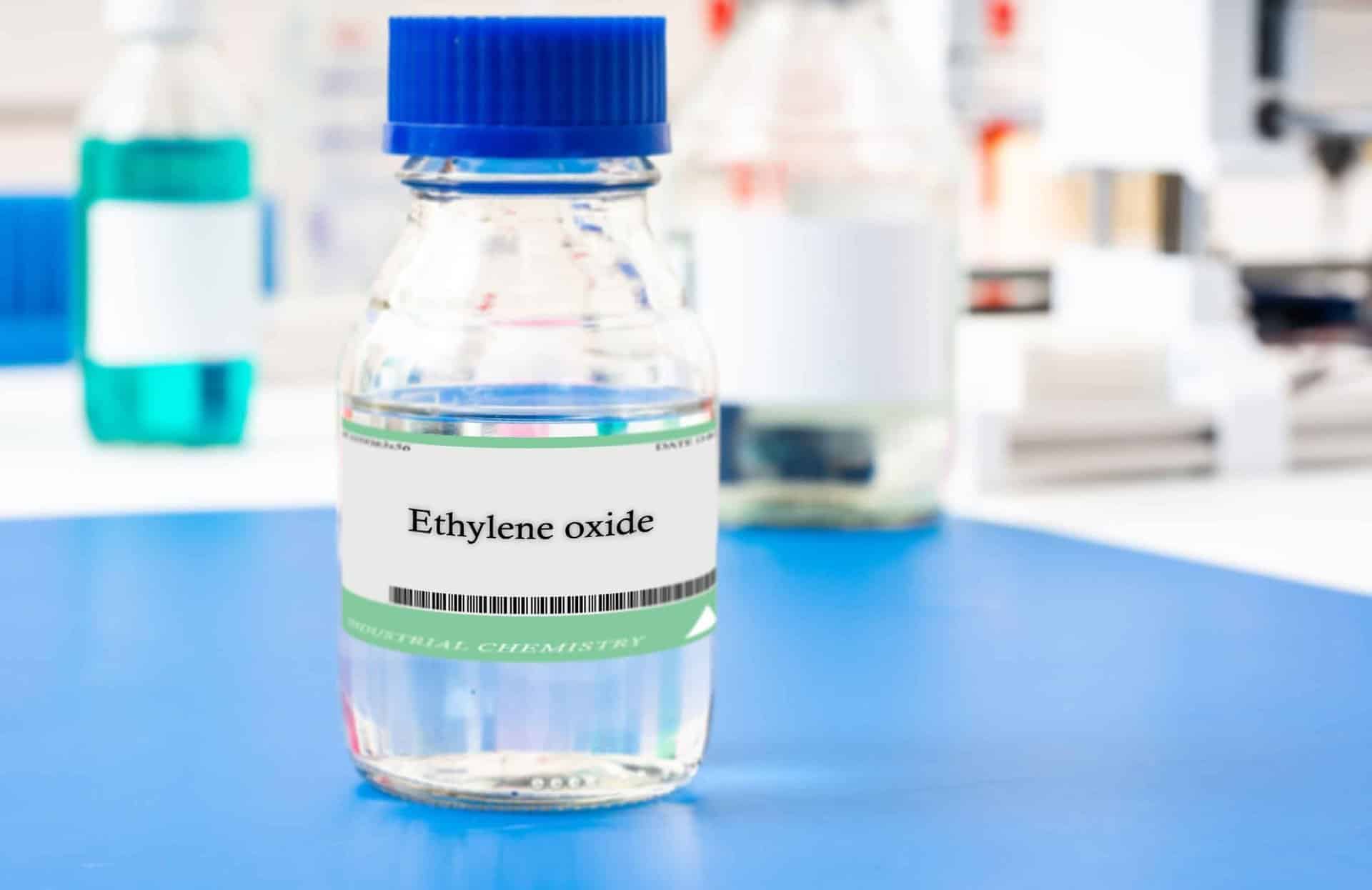
Geographic Areas With Known EtO Risks

Ethylene oxide (EtO) contamination has created significant health concerns in numerous communities across the United States.

The EPA has identified several hotspots where industrial emissions have potentially exposed thousands of residents to dangerous levels of this carcinogenic gas.

Cobb County, Georgia: Sterigenics Settlement

Residents in areas such as Cobb County, Georgia, have experienced substantial EtO exposure from the Sterigenics plant, which has operated since 1972.

Between 2015 and 2019, nine alleged ethylene oxide leaks occurred at this facility, leading to widespread contamination concerns in surrounding neighborhoods.

These emissions resulted in numerous lawsuits, with Sterigenics ultimately agreeing to pay $35 million to settle nearly 80 claims related to cancer and other health conditions allegedly caused by their operations.

Grand Rapids, Michigan: Viant Medical Facility

Similarly, residents in areas such as Grand Rapids, Michigan, faced significant risks from the Viant Medical facility located at 520 Watson Street SW.

Environmental testing revealed that parts of Grand Rapids had cancer risks nearly four times the national average due to ethylene oxide emissions from this operation.

After multiple violations for inadequate capture and control of EtO, Michigan regulators required Viant to cease all ethylene oxide sterilization activities by December 2020.

Other notable locations with documented EtO contamination include Willowbrook, Illinois; Lake County, Illinois; Covington, Georgia; and parts of Texas and Pennsylvania where commercial sterilizers have operated for decades.

Major Sources of Harmful Ethylene Oxide Emissions

Ethylene oxide (EtO) releases pose substantial risks to nearby communities.

By identifying major emission sources and risk factors, individuals can better assess their exposure potential and determine appropriate actions, including potential legal remedies.

Industrial Sterilization Facilities and ETO Emissions

Unlike other chemicals with similar applications, ethylene oxide presents heightened dangers due to its stability in air and ability to travel substantial distances from its source.

The EPA has documented numerous instances where the same facility repeatedly exceeded permitted emission levels over several years.

The most prominent sources of ethylene oxide pollution include:

  • Medical equipment facilities using EtO as a sterilizing agent for heat-sensitive devices
  • Commercial sterilizers process pharmaceuticals, spices, and cosmetics
  • Chemical manufacturing plants where EtO serves as a precursor for various products
  • Hospitals with onsite sterilization units, often operating under different regulatory requirements than their industrial counterparts

Recent investigations in Cook County, Illinois, revealed concerning pollution patterns leading to multiple settlements.

These cases highlighted the need for companies to reduce emissions through improved containment systems, monitoring protocols, and alternative sterilization methods where feasible.

How to Determine If You’re in a High-Risk Area

Several resources exist to help determine if you live in an area with dangerous EtO levels:

  1. EPA’s National Air Toxics Assessment (NATA) maps showing census tracts with elevated cancer risks
  2. State environmental agency monitoring data (availability varies by location)
  3. Federal court records documenting facilities with documented violations
  4. Environmental justice organizations tracking inhalation carcinogenicity risks in vulnerable communities

The health effects linked to chronic EtO exposure include increased cancer risks, respiratory issues, and neurological problems.

Those experiencing symptoms may pursue personal injury claims if they can establish a connection between their conditions and nearby emission sources.

New regulations proposed in 2024 aim to strengthen monitoring requirements and emission caps for facilities nationwide, potentially reducing community exposures.

However, historical exposures remain actionable for those affected before these protective measures were implemented.

Qualifying for an Ethylene Oxide Lawsuit

To qualify for an ethylene oxide (EtO) lawsuit, plaintiffs must establish two key elements: documented health problems linked to EtO exposure and provable proximity to facilities using this substance.

Courts examine both medical records and geographic data when determining lawsuit eligibility.

Health Conditions Linked to ETO Exposure

EtO is a powerful sterilizing agent used widely in medical equipment processing facilities.

Research has confirmed numerous health effects associated with prolonged EtO exposure, including:

  • Various cancer types (breast, lymphoma, leukemia, etc.)
  • Respiratory problems
  • Neurological disorders
  • Reproductive issues

The EPA classifies EtO as having high inhalation carcinogenicity, making it particularly dangerous when airborne particles are breathed in regularly.

EtO poses greater risks than many other chemicals used in industrial settings due to its volatility and ability to remain present in the atmosphere for extended periods.

Proving Proximity to Sterilization Facilities

Successful lawsuits require demonstrating that you lived or worked near facilities releasing EtO.

Many cases proceed through federal court when involving corporate defendants operating across state lines.

Evidence needed to file an Ethylene Oxide Lawsuit typically includes:

  • Residence/employment history showing proximity to commercial sterilizers
  • Duration of potential exposure (minimum timeframes vary by case)
  • Documentation that you were exposed at the same facility during operational periods with known EtO use

Notable examples include lawsuits in Cook County, Illinois, where numerous cases have resulted in substantial settlements.

Plaintiffs who can show that facilities failed to meet regulatory requirements designed to protect surrounding communities often have stronger cases.

Companies now face increasing pressure to reduce emissions through improved containment systems, but historical exposure remains actionable for those who developed health conditions before these improvements were implemented.

TruLaw: Accepting Clients for the Ethylene Oxide Exposure Lawsuit

Ethylene oxide exposure lawsuits are being filed by individuals across the country who developed cancer and other serious health conditions after being exposed to industrial emissions of this toxic gas.

TruLaw is currently accepting clients for the ethylene oxide exposure lawsuit.

A few reasons to choose TruLaw for your ethylene oxide exposure lawsuit include:

  • If We Don’t Win, You Don’t Pay: The ethylene oxide exposure lawyers at TruLaw and our partner firms operate on a contingency fee basis, meaning we only get paid if you win.
  • Expertise: We have decades of experience handling toxic exposure cases similar to the ethylene oxide exposure lawsuit.
  • Successful Track Record: TruLaw and our partner law firms have helped our clients recover billions of dollars in compensation through verdicts and negotiated settlements.

If you or a loved one developed health problems after exposure to ethylene oxide emissions from nearby industrial facilities, you may be eligible to seek compensation.

Contact TruLaw using the chat on this page to receive an instant case evaluation that can determine if you qualify for the Ethylene Oxide Lawsuit today.

Frequently Asked Questions

Published by:
Share
Picture of Jessica Paluch-Hoerman
Jessica Paluch-Hoerman

Attorney Jessica Paluch-Hoerman, founder of TruLaw, has over 28 years of experience as a personal injury and mass tort attorney, and previously worked as an international tax attorney at Deloitte. Jessie collaborates with attorneys nationwide — enabling her to share reliable, up-to-date legal information with our readers.

This article has been written and reviewed for legal accuracy and clarity by the team of writers and legal experts at TruLaw and is as accurate as possible. This content should not be taken as legal advice from an attorney. If you would like to learn more about our owner and experienced injury lawyer, Jessie Paluch, you can do so here.

TruLaw does everything possible to make sure the information in this article is up to date and accurate. If you need specific legal advice about your case, contact us by using the chat on the bottom of this page. This article should not be taken as advice from an attorney.

Additional Ethylene Oxide Lawsuit resources on our website:
All
FAQs
Injuries & Conditions
Legal Help
Other Resources
Settlements & Compensation
You can learn more about this topic by visiting any of our Ethylene Oxide Lawsuit pages listed below:
Ethylene Oxide Lawsuit | Ethylene Oxide Exposure Risks
Sterigenics Ethylene Oxide Lawsuit

Other Ethylene Oxide Lawsuit Resources

All
FAQs
Injuries & Conditions
Legal Help
Other Resources
Settlements & Compensation