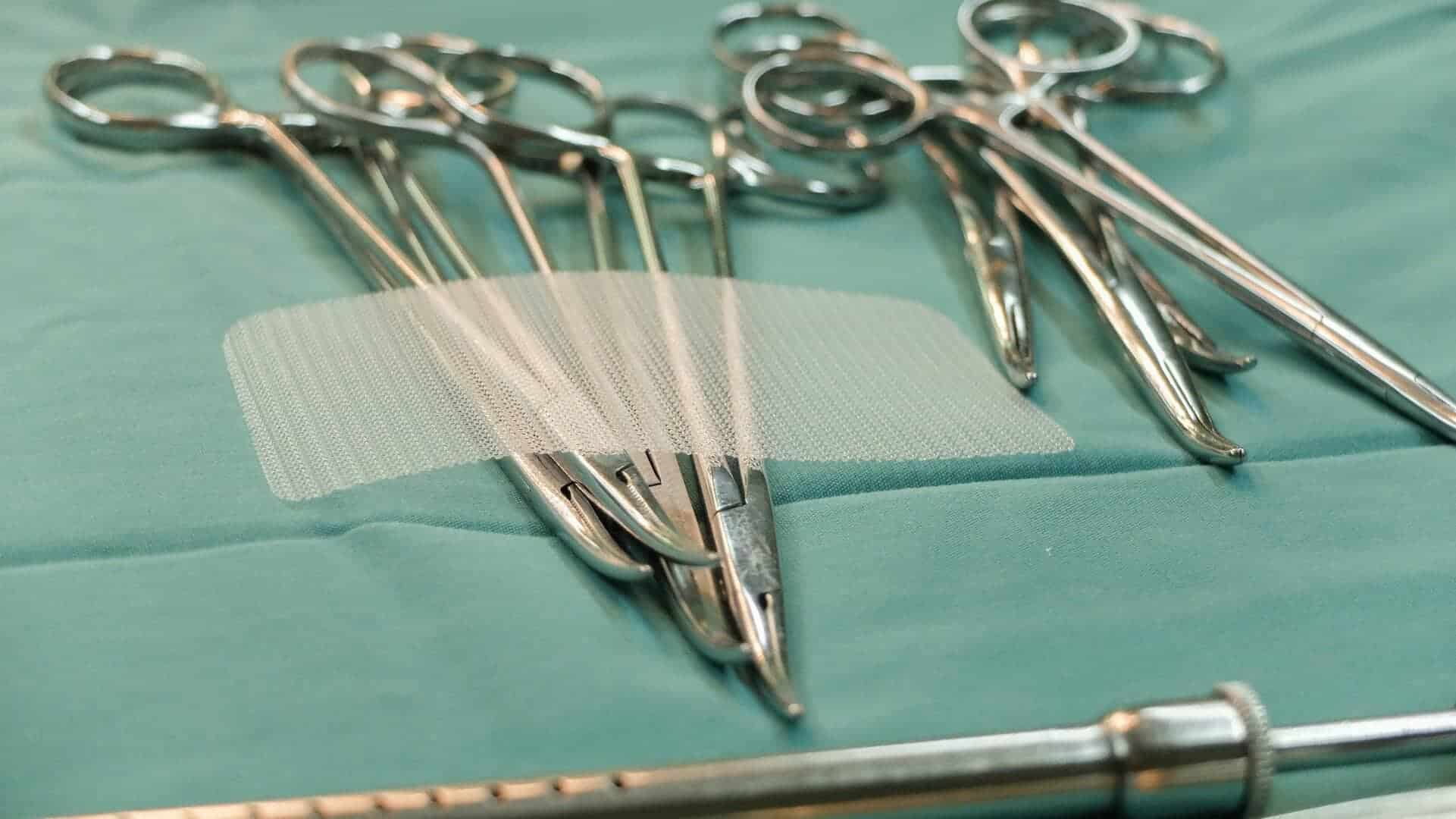
Some Covidien hernia mesh products may be defective.
Specifically, lawsuits claim that Covidien Parietex Surgical Mesh is defective and causes severe abdominal pain, chronic pain and other medical complications.
The issues with Covidien Parietex Surgical Mesh lie within the materials used to create the products: polyester and a “proprietary coating.
Polyester based hernia mesh and hernia mesh manufactured with monofilament polyester are known to be dangerous for use in the body, with scientific studies finding that monofilament polyester and polyester degrade more easily in the body, sometimes triggering an inflammatory response or hernia recurrence.
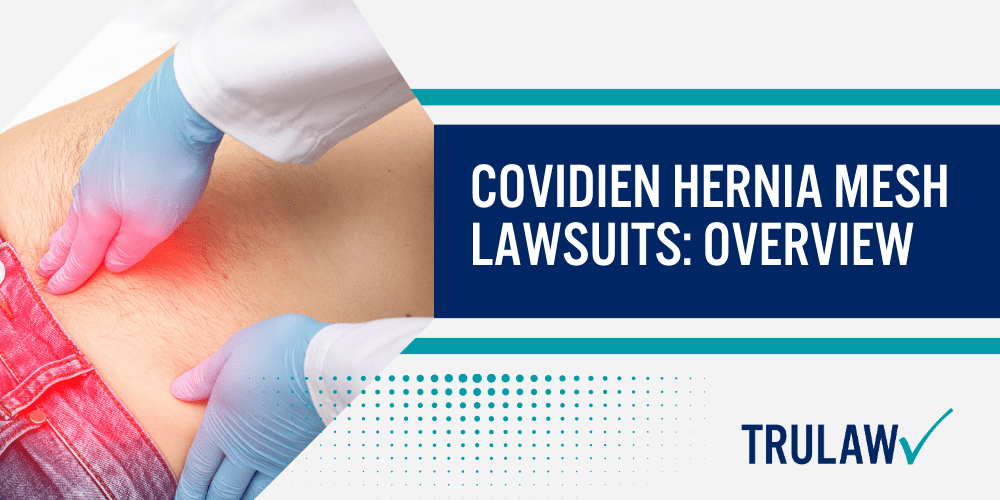
The Judicial Panel on Multidistrict Litigaiton (JPML) chose to consolidate Covidien Hernia Mesh cases.
The federal court system allows for the consolidation of cases when a large number of people have all been affected by the same thing.
In multidistrict litigation, one court will handle all pretrial proceedings, including bellwether trials, to ensure consistent rulings and to cut the costs and amount of resources.
Covidien Products Covered by the Hernia Mesh Lawsuits
Covidien Parietex Surgical Mesh products are named in lawsuits that claim serious injuries.
Covidien Parietex Mesh Products include the following:
- Parietex Composite Ventral Patch
- Parietex ProGrip Mesh
- Parietex Optimized Composite (PCOx) Mesh
- Parietex Plug and Patch System
- Parietex Optimized Composite Open Skirt (PCO OSx) Mesh
- Parietex Composite (PCO) Parastomal Mesh
- Parietex Composite Hiatal (PCO 2H) Mesh
- Parietex Hydrophilic Anatomical Mesh
- Parietex Folding Mesh
- Parietex Lightweight Monofilament Mesh
- Parietex Flat Sheet Mesh
If you or a loved one have been injured by any Covidien Hernia Mesh product, such as Covidien Parietex Composite Mesh, Covidien Parietex ProGrip Mesh, or other similar products, you may qualify to pursue financial compensation.
Hernia Mesh Injuries
Patients who suffered inguinal hernias and underwent surgery to implant hernia mesh do not deserve the extra severe abdominal pain that comes with a defective hernia mesh product.
Medical complications and injuries related to Covidien Parietex Surgical Mesh and other related hernia mesh products include the following:
- Mesh migration
- Hernia recurrence
- Bowel obstruction
- Mesh shrinkage
- Fistula (abnormal connection between organs, vessels or intestines)
- Granulomas (cluster of white blood cells as a reaction to infection, irritation, foreign objects, etc.)
- Seroma (abnormal accumulation of serious fluid in a dead space containing plasma and lymphatic fluid)
- Foreign reaction to mesh
- Other medical complications
In order to deal with defective hernia mesh product reactions, hernia repair procedures may often be necessary.
Procedures include hernia repair surgery, revision surgery to remove pieces of broken surgical mesh, and other surgical interventions.
Sometimes, however, revision surgery is not possible and pieces of surgical mesh cannot be removed.
In this case, patients may have to live with fragments of defective hernia mesh within their body for the rest of their life.
This is unacceptable, and hernia mesh manufacturers should be held liable for injuring consumers.
Covidien Hernia Mesh Injury Reports
Several injury reports have been submitted to the US Food and Drug Administration (FDA) following hernia surgery using Covidien hernia mesh.
Submitted in 2014, one patient’s adverse event report discussed the fact that they underwent inguinal hernia repair surgery where a Covidien Parietex ProGrip Mesh was used.
The patient developed “extreme debilitating pain” at the surgery site and into the groin area.
After attempts to relieve the pain through pain management, the patient had a revision surgery to remove the hernia mesh.
Another adverse event report from 2014 stated that after an inguinal hernia surgery, a patient experienced increased pain and had cyro-ablation to dead the nerves and reduce pain.
A 2009 adverse event report stated that a patient underwent inguinal hernia surgery, which failed, and when they went back for two hernia repair procedures, the Parietex mesh was found at the bottom of the patient’s stomach, having migrated significantly from the original surgery site.