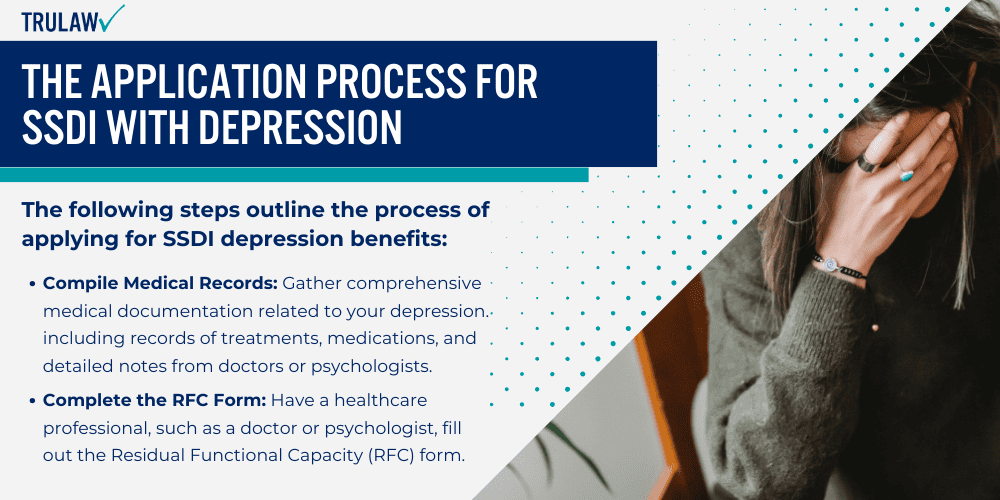
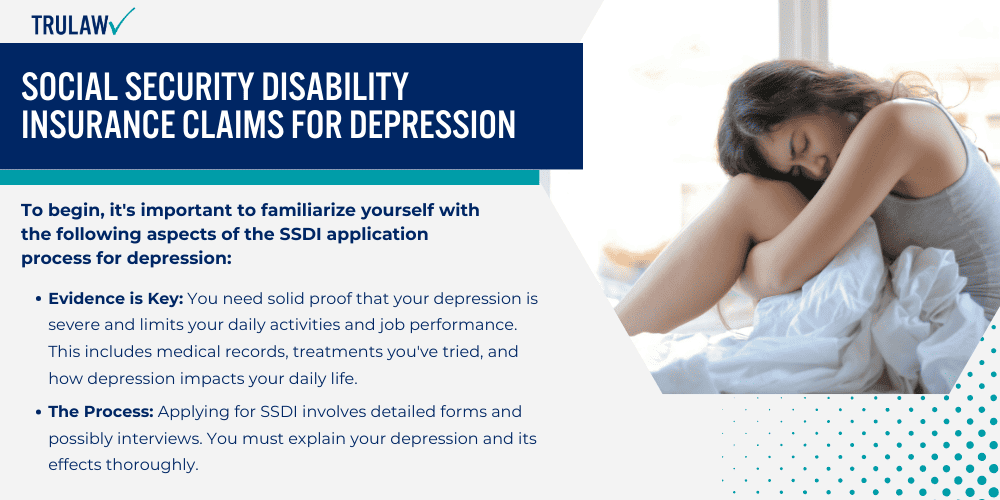
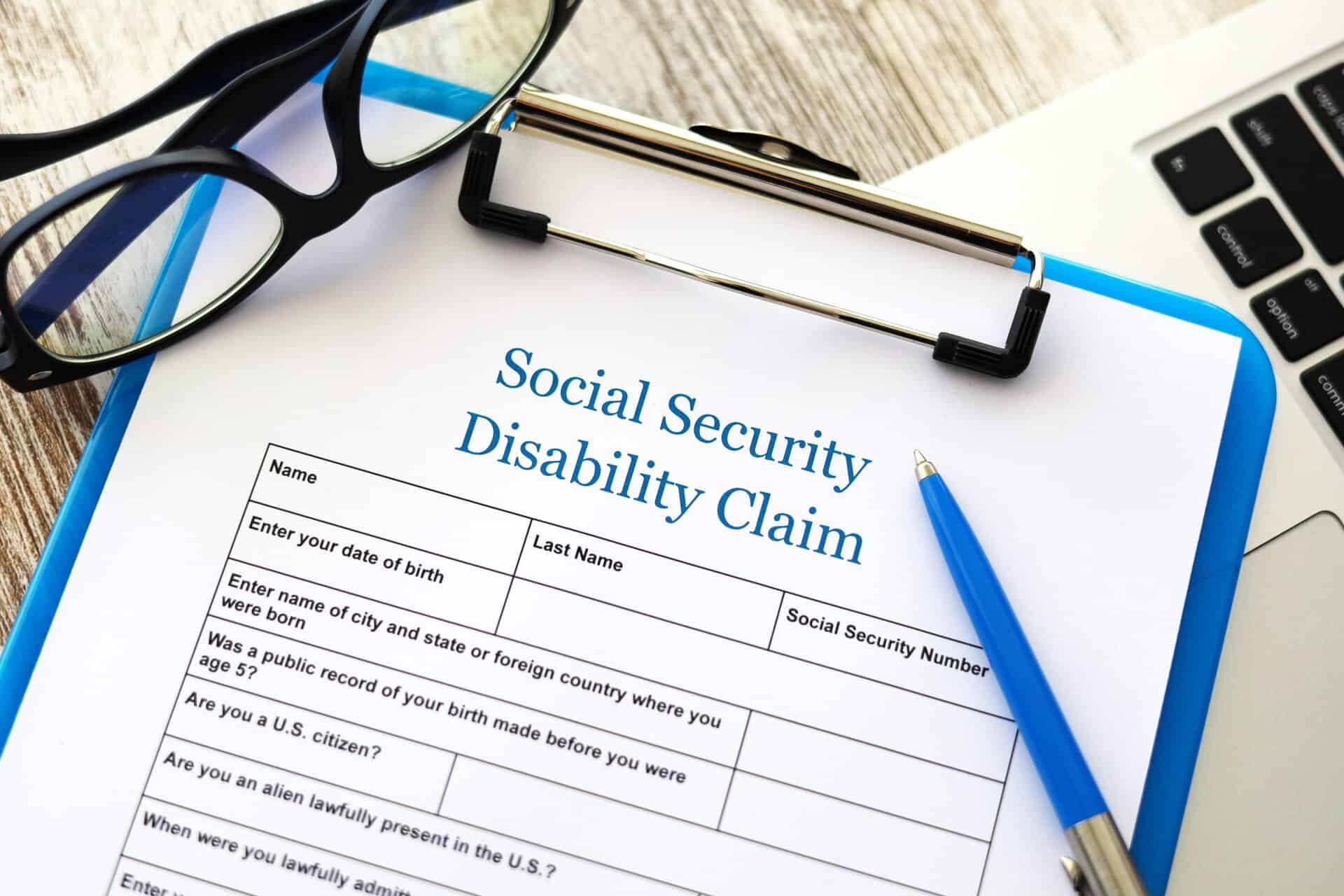
Eligibility for Social Security Disability due to depression hinges on specific criteria that align with SSDI guidelines.
The condition must be medically documented and exhibit a level of severity that impairs one’s ability to engage in substantial gainful activity.
SSDI Depression: Qualification Criteria
Depression can hit hard, and sometimes it’s so severe that working becomes impossible.
If this is you, Social Security Disability Insurance (SSDI) may recognize your depression as a disability and provide help.
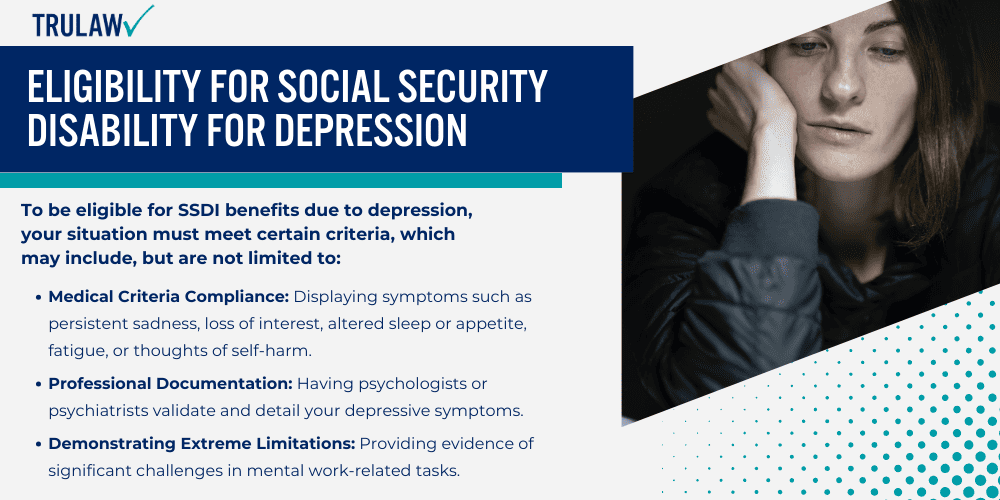
To be eligible for SSDI benefits due to depression, your situation must meet certain criteria, which may include, but are not limited to:
- Medical Criteria Compliance: Displaying symptoms such as persistent sadness, loss of interest, altered sleep or appetite, fatigue, or thoughts of self-harm.
- Professional Documentation: Having psychologists or psychiatrists validate and detail your depressive symptoms.
- Demonstrating Extreme Limitations: Providing evidence of significant challenges in mental work-related tasks.
- Cognitive Function Impairment: Showing difficulties in understanding, learning, or applying information.
- Social Interaction Challenges: Proving depression hinders effective communication or interaction in a work setting.
- Self-Management Struggles: Illustrating inability to adapt to changes or manage personal needs.
- Concentration and Pace Difficulties: Documenting issues with focus or maintaining a consistent work pace.
- Chronic Severity Evidence: Presenting medical records that reflect long-term, severe depression, monitored by healthcare professionals.
To get SSDI benefits for major depressive disorder and other mental health conditions related to depression like bipolar disorder and anxiety disorders:
- You’ve got to prove these issues have been there for at least two years.
- There should be evidence of ongoing medical treatment.
- Daily life must be greatly affected; perhaps the simple act of getting dressed is now tough because of how depressed you feel.
For SSDI benefits based on major depressive episodes:
- SSA will check if you’ve worked enough in recent years.
- They’ll look at the taxes taken from your pay when they decide if you’ve earned enough “work credits.”
Even though there’s usually a five-month wait after approval:
- A little while later, they let some folks try working again while still getting SSDI money.
- They want people to find out if they can go back into the workplace without losing their benefits right away.
Types of Depression Considered for SSDI Benefits
Depression is a mental health condition that can severely impact a person’s ability to function daily and maintain employment.
Social Security evaluates different forms of depression when determining eligibility for disability benefits.
The types of depression that may qualify for SSDI benefits include, but are not limited to:
- Major Depressive Disorder: This condition involves profound sadness or a lack of interest in almost all activities for a minimum of two weeks.
- Persistent Depressive Disorder: Characterized by a chronic state of depression, where the individual feels down most of the time for two years or more.
- Bipolar Disorder: This disorder is marked by extreme mood swings, ranging from periods of high energy to episodes of deep sadness.
- Depression Due to Another Medical Condition: In some cases, individuals suffer from depression as a direct result of another medical condition, significantly impacting their mood.
It is essential for a medical professional to diagnose these conditions to qualify for SSDI benefits.
Each type of depression can severely affect individuals, making everyday life and work challenging to manage.
Social Security will assess how your specific type of depression hinders your ability to perform regular activities before approving monthly benefits.