To be eligible for SSDI hearing loss benefits, applicants must meet specific guidelines that assess the severity and impact of their condition.
These benchmarks are outlined by the Social Security Administration and hinge on audiometric test results, communication abilities, and whether medical interventions like cochlear implants have been attempted.
SSDI Hearing Loss: Eligibility to File a Claim
Hearing loss can significantly impact an individual’s ability to work and perform daily activities, qualifying them for Social Security Disability Insurance (SSDI) benefits.
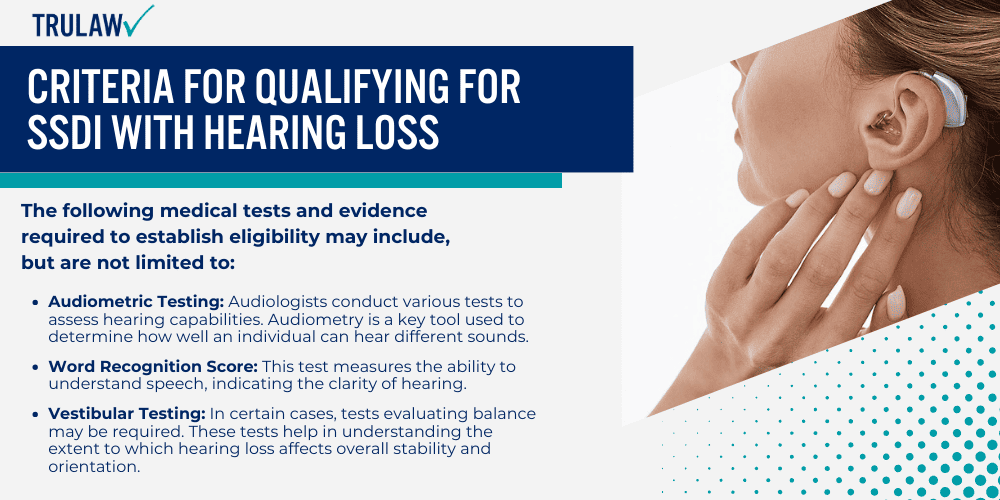
The following medical tests and evidence required to establish eligibility may include, but are not limited to:
- Audiometric Testing: Audiologists conduct various tests to assess hearing capabilities. Audiometry is a key tool used to determine how well an individual can hear different sounds.
- Word Recognition Score: This test measures the ability to understand speech, indicating the clarity of hearing.
- Vestibular Testing: In certain cases, tests evaluating balance may be required. These tests help in understanding the extent to which hearing loss affects overall stability and orientation.
- Medical Record Evidence: Documentation should include any treatments or devices used, such as cochlear implants or hearing aids. The effectiveness of these aids in facilitating normal tasks or employment is a critical factor in the SSDI claim.
- Doctors’ Notes and Treatment History: Detailed notes on any ear surgeries, infections, or other relevant medical interventions are vital. They provide a comprehensive view of the individual’s hearing loss condition and treatment efforts.
The Social Security Administration uses this evidence to determine if the hearing loss is severe enough to warrant SSDI benefits.
It’s important that the documentation clearly illustrates how the hearing loss impacts the individual’s ability to work and manage daily life.
Blue Book Listings
The Social Security Administration (SSA) uses a guide called the “Blue Book” to help decide if someone’s hearing loss is bad enough for SSDI.
This book has strict rules on how much you can’t hear or understand words to get benefits.
For example, scores from hearing tests need to show that your average hearing threshold sensitivity in your better ear is very poor.
Also, word recognition must be low; you might have to score less than 40% correct on standardized words lists, even with a hearing aid.
You’ll need special medical exams like audiometric testing and auditory evoked response testing.
The SSA wants this proof before saying yes to your disability claim.
If these tests prove severe or profound hearing loss, social security benefits may support you financially due to inability in maintaining employment because of the disability.