Recent studies by the Pew Research Center reveal that heavy reliance on visual-centric platforms may contribute to unhealthy social media use, where users evaluate themselves against idealized content.
Instagram’s design features—such as likes, comments, and followers—have become key metrics for teens evaluating their own life success and popularity; this can exacerbate feelings of inadequacy or exclusion.
Instagram’s Mental Health Effects
The Wall Street Journal has highlighted how these elements create an environment where kids’ well-being is compromised due to the constant pressure to post idealized content that receives validation from peers.
These mental health challenges are more pronounced in youth who spend long hours curating their online presence.
Instagram, with its focus on visual content, can significantly affect teens’ self-esteem issues.
Scrolling through idealized content often leads to evaluating oneself against unrealistic standards of beauty and lifestyle.
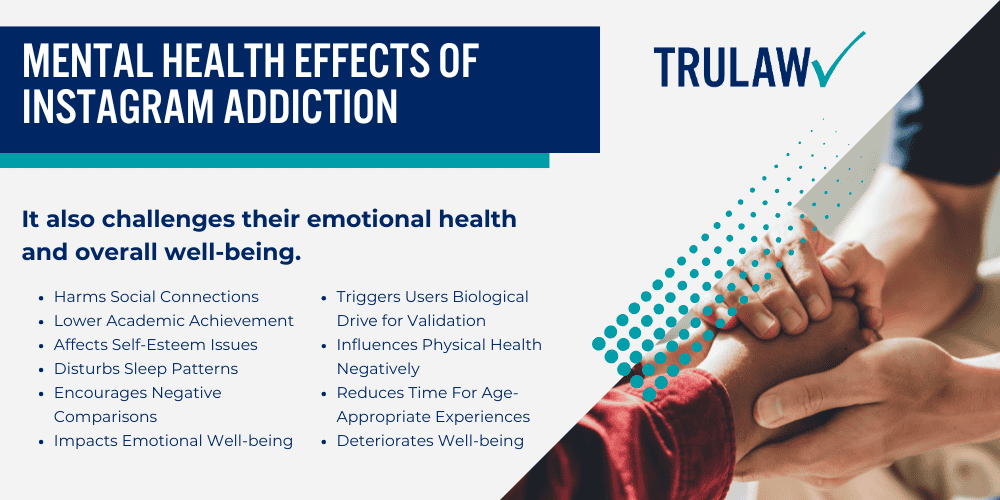
Instagram’s visually-focused content significantly impacts teens’ self-perception and social interactions, often resulting in:
- Self-Esteem Issues: Constant exposure to idealized images can lead to feelings of inadequacy and lowered self-esteem.
- Social Anxiety: The pressure to maintain a particular online image and the fear of missing out can heighten social anxiety.
- Depression and Self-Harm: Research links prolonged Instagram use to increased rates of depression, self-harm, and suicidal thoughts among teens.
- Eating Disorders: There’s a noted association between Instagram use and the risk of developing eating disorders, particularly in girls.
- Sleep Disturbance: Excessive nighttime use of Instagram disrupts sleep patterns, leading to insomnia and impaired daily functioning.
- Addiction and Overuse: Features like likes and comments exploit teens’ biological drive for social approval, fostering addictive behaviors.
- Impaired Social Skills: Over-reliance on digital interactions can diminish real-life social skills and communication abilities.
- Academic Interference: High engagement with Instagram during school hours can detract from academic focus and performance
Teens who spend hours on Instagram might find themselves battling negative thoughts about their lives as they contrast them with the perfected images they see.
Extended use of this preferred platform has also been linked to Instagram mental health concerns, including depression and self-harm.
Users evaluate their popularity based on likes and comments, driving a user’s biological drive for social approval into overdrive.
Mental Health Research Studies: Instagram Addiction
Research studies have uncovered a troubling connection between the use of Instagram and mental health issues in teens.
These investigations highlight the need for age-appropriate standards in social media usage:
- Correlation with Depression and Anxiety: Studies suggest that teens who spend more time on Instagram report higher levels of depression and anxiety. The constant comparison with others can lead to self-esteem issues, as users contrast their own lives with the carefully curated images of peers.
- Association with Eating Disorders: Evidence links Instagram use to an increased risk of eating disorders among teenagers, especially girls. The platform’s emphasis on visual appeal and body image can exacerbate pre-existing concerns about weight and appearance.
- Impact on Sleep Patterns: Excessive use of social media platforms, including Instagram, is associated with poor sleep quality. Teens who regularly engage with these apps at night may experience insomnia, disrupting their ability to function well during the day.
- Contribution to Self-Harm and Suicidal Thoughts: Instagram has been linked to alarming rates of suicidal thoughts and behaviors among young users. The raw time spent scrolling through feeds full of idealized lives can make vulnerable teens feel isolated or inadequate.
- Addictive Design Features: Psychologists recognize that certain features within many apps teens prefer are designed to exploit users’ biological drives for social interaction and self-expression, making it hard for them to disconnect or even switch into airplane mode voluntarily.
- Adverse Effects on Social Skills: As kids invest more time in virtual interactions, real-life social skills may suffer. Friends become digital entities rather than partners in face-to-face adventures; this shift might limit kids’ ability to communicate effectively offline.
- Change in Preferred Platforms and Behaviors: Research shows that as new platforms gain or lose traction, teens migrate accordingly—yet the underlying patterns remain extremely common across various apps, suggesting a broader issue within social media.
- Influence on Academic Performance: Excessive engagement with apps like Instagram during school hours has led some districts to question if unfollowing people or limiting app access might bolster academic focus against the distraction these platforms provide.
How Instagram’s Algorithm Targets Teens
Instagram’s design cleverly taps into teens’ cravings for social interaction and self-expression.
The platform offers a range of features that resonate with young users, from aesthetically pleasing filters to the ability to share their lives through stories and posts.
These elements foster an environment where kids can showcase their identity and creativity, making Instagram one of the most preferred platforms for this age group.
The application also exploits users’ biological drive for social approval, using algorithms that promote content based on likes and comments.
This can intensify peer pressure and create a loop where teens are constantly checking for updates, fearing they might miss out if they consider leaving one’s phones aside.
As a result, these design choices encourage prolonged use and deepen engagement, which has linked Instagram with various mental health concerns in teenagers, such as self-esteem issues related to their well-being.