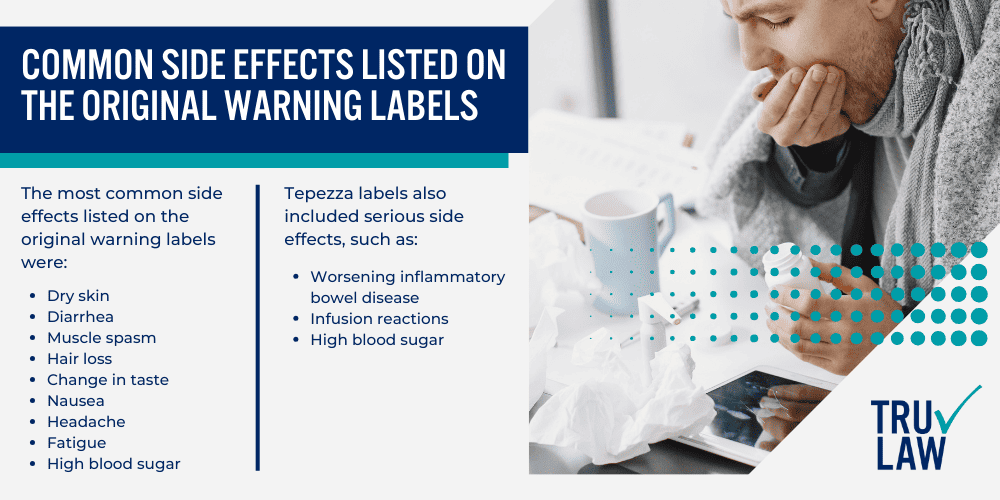
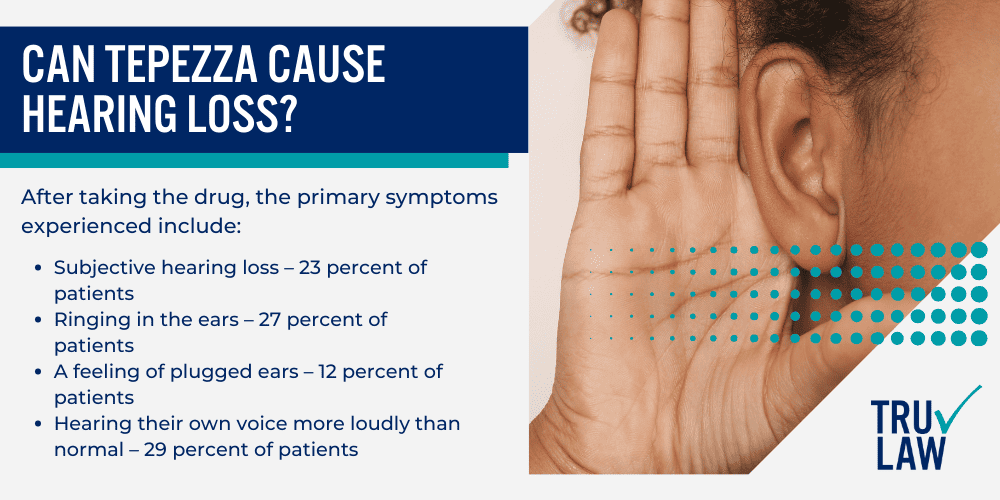
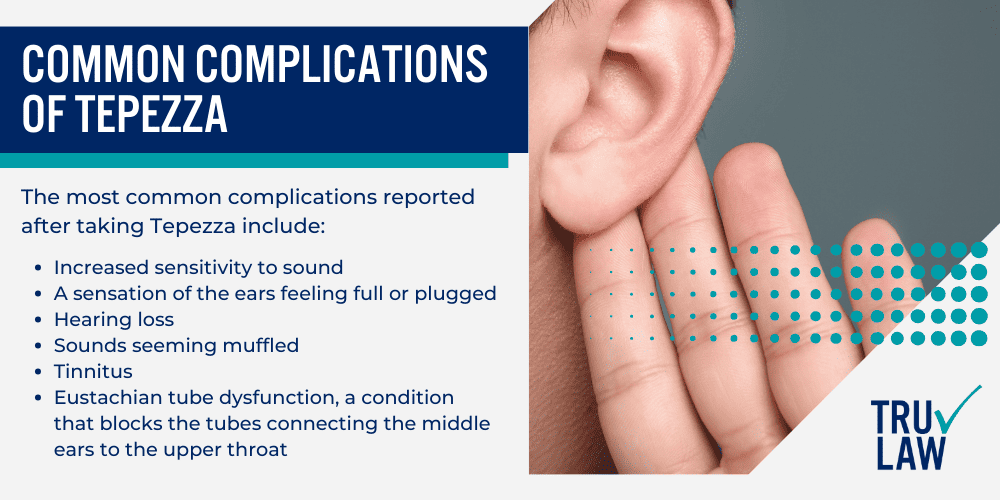
Horizon didn’t disclose the risk of hearing loss on Tepezza warning labels.
Failure to warn is a type of defect in product liability cases.
It occurs when a manufacturer knows about a possible risk of its drug but doesn’t include it on the warning label or packaging.
Your doctor might not be at fault for prescribing the drug to you if they weren’t aware of the dangers.
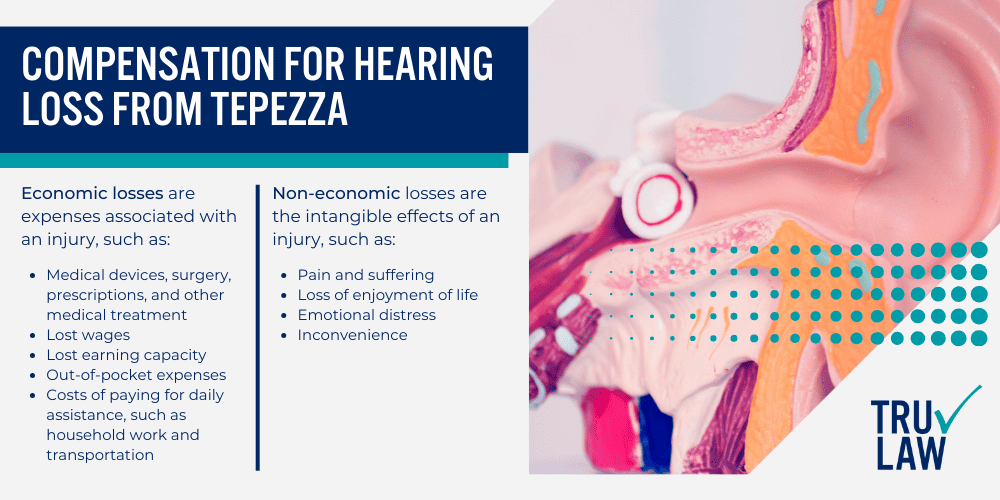
You can hold the manufacturer liable for your hearing loss and related expenses, such as medical treatment and out-of-pocket costs.
Two options for pursuing compensation are a product liability claim and a mass tort lawsuit.

You can file a claim with the manufacturer’s liability insurance company in a product liability claim.
You don’t assert that the drug has physical flaws in a claim based on failure to warn.
Instead, you must establish the manufacturer knew about the adverse effects but didn’t provide adequate warning labels.
You must also prove the defect contributed to your injury.
Mass tort cases involve a large group of people harmed by the same defendant’s actions.
A mass tort lawsuit combines cases from multiple plaintiffs into a single legal action.
You participate in a mass tort by working with others on similar aspects of the case that apply to everyone.
If any element of your case differs from the rest of the group, such as the severity of your injury, you and your lawyer work on that part separately.