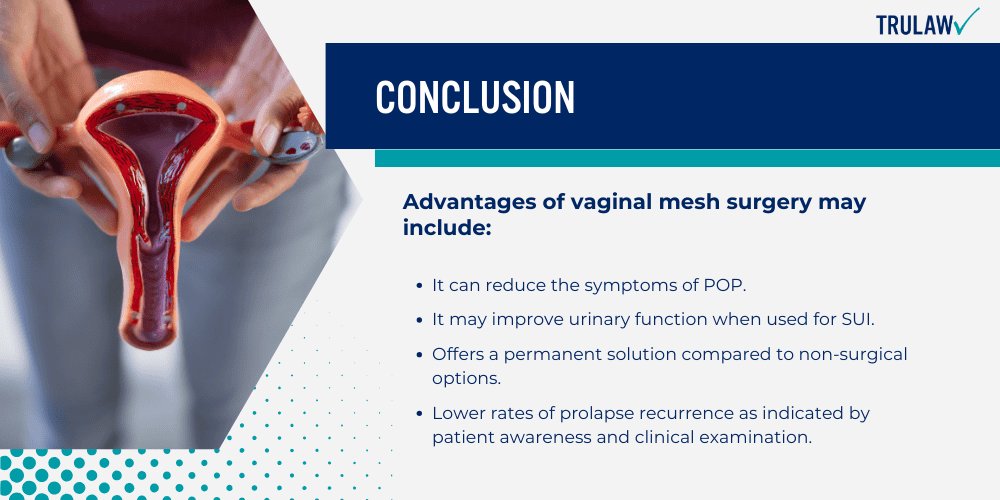
Vaginal mesh surgery specifically addresses two main conditions, Pelvic Organ Prolapse (POP) and Stress Urinary Incontinence (SUI).
These are common pelvic floor disorders that can significantly impact quality of life.
Pelvic Organ Prolapse (POP)
Pelvic organ prolapse occurs when pelvic organs, like the bladder, rectum, or uterus, descend into the vaginal canal due to weakened supporting pelvic muscles and tissues.
Here’s how vaginal mesh is used to treat pelvic organ prolapse:
- Reinforcing pelvic anatomy: Mesh is used to provide additional support to the weakened areas.
- Preventing further prolapse: By securing prolapsed organs, the mesh helps prevent organs from descending further into the vagina.
- Restoring organ function: Proper positioning of pelvic organs can improve their function.
- Improving quality of life: Successful surgical outcomes can alleviate discomfort and embarrassment, improving the patient’s day-to-day life.
The use of transvaginal mesh for POP repair has been met with both success and scrutiny, leading to careful patient selection and thorough discussion of risks and benefits.
Stress Urinary Incontinence (SUI)
Stress urinary incontinence is the unintentional leakage of urine during activities that put pressure on the bladder, such as coughing, sneezing, or exercising.
The role of vaginal mesh in treating SUI involves:
- Supporting urethra: Mesh acts as a sling to support the urethra, helping it remain closed during stress activities.
- Restoring urinary control: The aim is to reduce or eliminate episodes of leakage.
- Minimizing invasive procedures: The surgical approach often involves smaller incisions and can be less invasive than other surgical options.
- Duration of effectiveness: Many patients experience long-term relief from SUI symptoms after mesh placement.
It’s crucial for patients to have a detailed understanding of potential outcomes and risks associated with mesh use in the treatment of urinary incontinence.