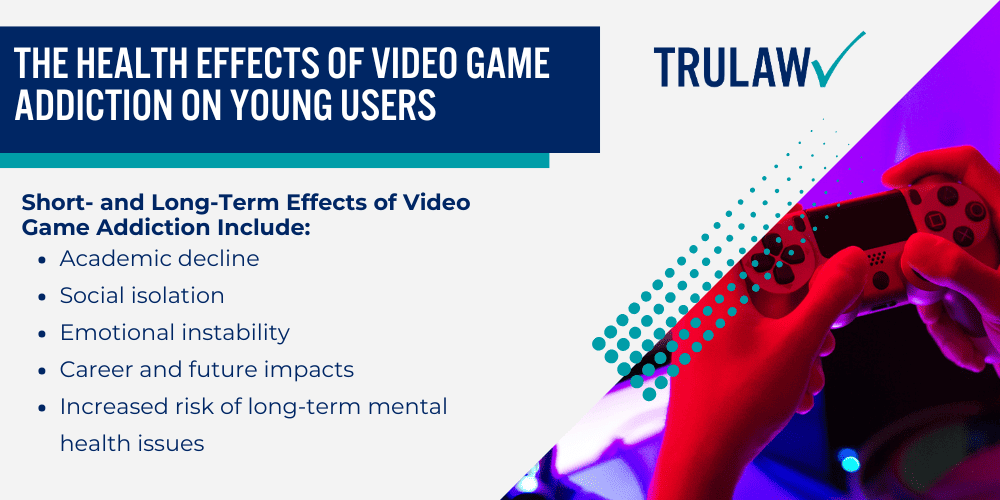
Video game addiction lawsuits allege that gaming companies, including Epic Games, Electronic Arts (EA), and Microsoft, deliberately designed their games to encourage addictive behavior, particularly among minors.
Popular titles like Fortnite, Roblox, and Call of Duty are under scrutiny for using tactics such as microtransactions, loot boxes, and feedback loops, which may promote compulsive gaming behavior.
Video Game Addiction Lawsuit Overview
These practices are believed to exploit the behavioral vulnerabilities of young players, leading to addiction, financial strain, and mental health challenges.
Plaintiffs claim that these games were intentionally designed to be addictive and did not provide sufficient warnings to consumers, especially parents, regarding the potential risks.
Lawsuits argue that game developers used behavioral psychology research to enhance the addictive qualities of these games, driving both in-game spending and excessive playtime.
Microtransactions are vital in these claims, targeting impulsive behavior and peer pressure.
Loot boxes and other “pay-to-win” features are also highlighted as harmful, creating a gambling-like environment that can negatively impact young gamers.
Families impacted by these practices are now seeking compensation for the financial and emotional damage caused by this alleged exploitation.
If your child has developed a video game addiction that has led to financial strain or mental health challenges, you may be eligible to seek compensation from major gaming companies.
Contact TruLaw using the chat on this page to receive an instant case evaluation to see if you qualify to file a video game addiction lawsuit.
Defendants in the Video Game Addiction Lawsuits
Families across the country are filing lawsuits against video game developers and distributors.
These lawsuits claim that companies intentionally created games designed to be addictive, taking advantage of young, vulnerable players.
Major developers and publishers are under scrutiny for using manipulative mechanics and predatory monetization practices.
Gaming companies facing investigation in video game addiction lawsuits include:
- Epic Games: Fortnite
- Microsoft Corporation: Minecraft
- Roblox Corporation: Roblox
- Rockstar Games: Grand Theft Auto V
- Activision Blizzard: Call of Duty, Overwatch
- Valve Corporation: Counter-Strike: Global Offensive, Counter-Strike 2
- Respawn Entertainment: Apex Legends
- Ubisoft: Rainbow Six: Siege
- Psyonix: Rocket League
- Blizzard Entertainment: World of Warcraft
- Other prominent game developers
These companies are accused of fostering addictive behaviors and contributing to mental health issues, especially in minors.
Gaming addiction is reported across a variety of platforms, including PlayStation, Xbox, Nintendo Switch, PCs, laptops, and smartphones.